
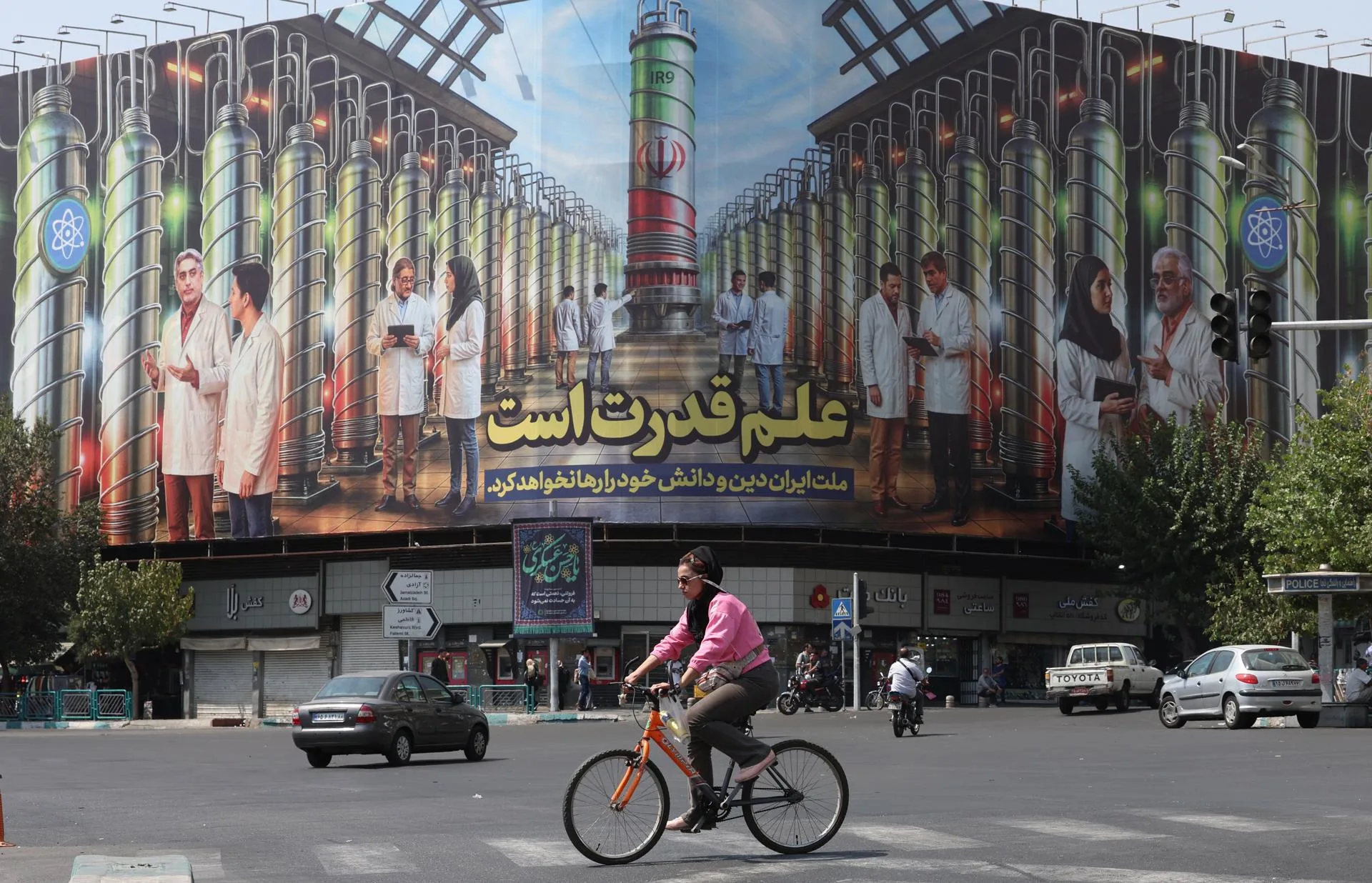
Tehran (EFE).— Iran said Saturday it is prepared to resume stalled nuclear negotiations with the United States, but only under “new conditions” shaped by its recent 12-day war with Israel, insisting that mutual respect and sanctions relief are essential.
“The negotiations cannot take the same form as before the war. It is not possible to sit at the dialogue table under the same previous conditions after all the consequences of the conflict,” Foreign Minister Abbas Araqchi said at an event in Tehran, according to the official IRNA news agency.
New terms for talks
Araqchi stressed that while negotiations remain on the agenda, they must take on “a new shape and different dimensions.”
“Iran is ready to engage in dialogue, but respect for our sovereignty and the lifting of sanctions are indispensable elements,” he said, adding that messages are currently being exchanged with Washington through intermediaries.
Talks will resume, he continued, “the day the Americans conclude that they are ready for negotiations based on common interests and mutual respect.”
The foreign minister underlined that Tehran “will not yield to pressure or blackmail,” a clear reference to Washington’s demand that Iran halt uranium enrichment, a red line for the Islamic Republic.
Iran and the US had held five rounds of nuclear negotiations since January and were expected to hold a sixth before the war with Israel broke out in June.
Israel launched airstrikes on Iranian targets on Jun. 20, sparking the conflict. The US joined on Jun. 22 with strikes against three nuclear facilities, just days before a ceasefire took effect.
Cooperation with IAEA
Araqchi also addressed ongoing discussions with the International Atomic Energy Agency (IAEA), saying both sides are close to finalizing a new cooperation framework following Israeli and US attacks on Iranian nuclear sites.
“Good negotiations have been held and we are very close to reaching a new framework for cooperation,” he said.
Iran’s government confirmed Thursday that new meetings with the IAEA will be held in Vienna to establish a fresh cooperation arrangement, suspended earlier this year after parliament passed a law limiting monitoring in response to the June conflict.
“In line with the law approved by Parliament, and considering the realities on the ground and the changes that have taken place, we will be able to start a new stage of cooperation with the IAEA that addresses all our concerns,” Araqchi said.
European pressure grows
Araqchi’s remarks come after the so-called E3, the United Kingdom, France, and Germany, triggered on Aug. 28 the United Nations’ snapback sanctions mechanism against Iran over its nuclear program.
The three European powers urged Tehran to return to negotiations with the U.S., resume full cooperation with the IAEA, and clarify the whereabouts of 400 kilograms of uranium enriched to 60%.
The E3 warned that unless Iran complies, international sanctions could be reinstated in full. EFE
ash/seo