
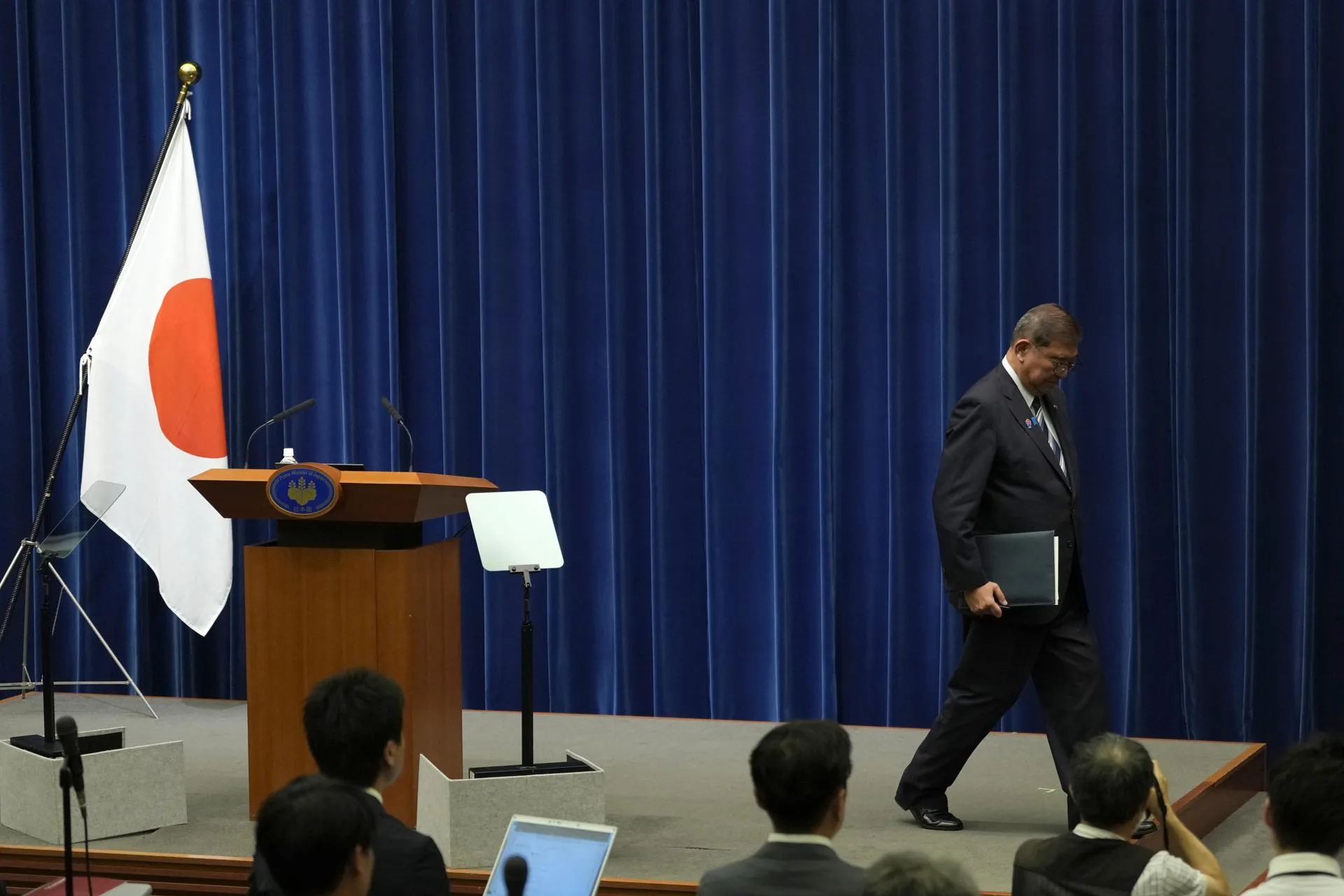
Tokyo (EFE).- Japanese Prime Minister Shigeru Ishiba announced his resignation Sunday, stepping down on the eve of a key Liberal Democratic Party (LDP) meeting that was expected to strip him of power following stinging electoral defeats.
“I have decided to resign as leader of the Liberal Democratic Party. According to the party statutes, the call for an extraordinary campaign to elect a new president is no longer necessary,” Ishiba said at a hastily arranged press conference after news of his decision leaked.
“I have long said I had no intention of clinging to power and would step aside at the appropriate time,” Ishiba added.
“That time is now,” he said, speaking shortly after the return of Ryosei Akazawa, Japan’s chief tariff negotiator and Minister of Economic Revitalization, who signed a US executive order lowering tariffs on Japanese cars to 15 percent.
Akazawa, a close ally of Ishiba, appeared at the press conference alongside government spokesman Yoshimasa Hayashi and other cabinet members.
Ishiba, who will remain in office until the LDP elects a new leader, hailed the trade deal with the Trump administration as a “milestone” for Japan.
He urged his successor to fully implement the agreement and address public concerns surrounding it.
The outgoing prime minister said his resignation was also an act of accountability after the July 20 upper house elections, when the ruling coalition lost its majority, triggering a revolt within the party.
Ishiba’s exit as LDP leader automatically ends his tenure as prime minister, since Japan’s head of government is the leader of the party with the most seats in parliament.
Elected party leader only last September, Ishiba reviewed what he considered his key achievements, including the trade deal with Washington, a record rise in the minimum wage, and an emergency budget to tackle inflation.
He thanked supporters, apologized “for having to resign,” and urged his successor to strengthen ties with the United States, deepen partnerships with Asia, Africa and Europe, and prepare for new security challenges.
He voiced particular concern over growing cooperation between North Korea, Russia and China, stressing that building credible deterrence was “an urgent priority.”
On domestic issues, Ishiba highlighted the need to revitalize rural economies, reverse population decline, and manage the burden of an aging society.
His leadership had already been weakened after the LDP coalition lost its majority in the more powerful lower house in last October’s general election, leaving Japan with its first minority government since World War II.
The LDP is expected to announce Monday when it will hold elections to choose a new leader, and subsequently the country’s next prime minister. Ishiba confirmed he will not run.
Public polls suggest the leading contenders include former Economic Security Minister Sanae Takaichi and current Agriculture Minister Shinjiro Koizumi, who rose to prominence during the country’s recent “rice crisis.” EFE
mra-sk