
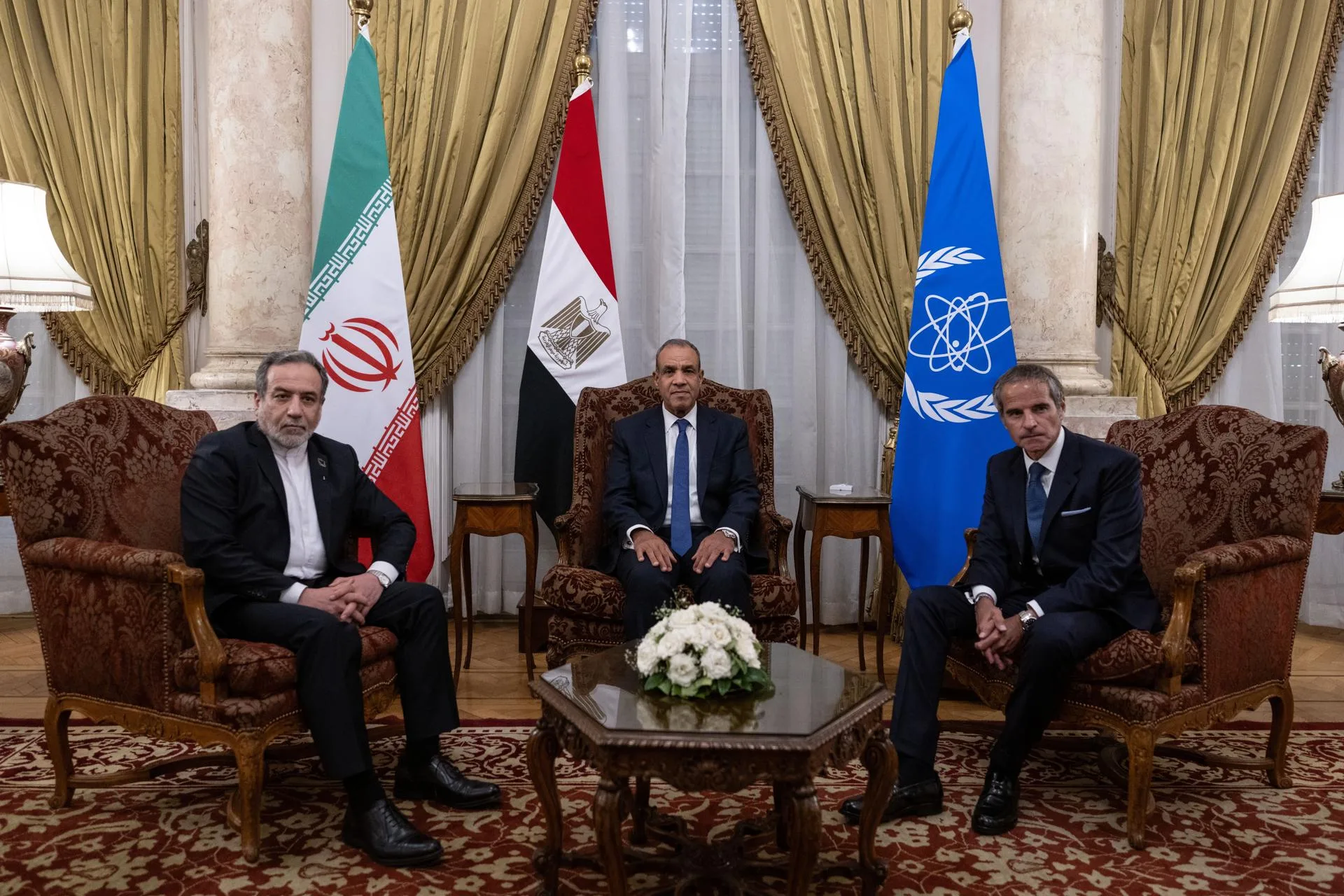
Cairo, Sep 9 (EFE). – After a full day of negotiations in Cairo, Iran and the International Atomic Energy Agency agreed Tuesday to resume bilateral cooperation.
The agreement was signed at Cairo’s Tahrir Palace by Iranian Foreign Minister Abbas Araqchi and IAEA Director General Rafael Grossi, with Egyptian Foreign Minister Badr Abdelaty in attendance.
“Iran and the IAEA have reached an understanding on how to proceed under the new circumstances,” Iranian Foreign Ministry spokesman Esmaeil Baqayei told state television.
Abdelaty underscored both parties’ desire to resume talks and rebuild confidence, emphasizing that Tuesday’s agreement demonstrates the IAEA and Iran’s willingness to resume technical cooperation.
The Iranian government had suspended cooperation with the IAEA following the United States’ and Israel’s attacks on its nuclear facilities in June, which they justified on Iran’s enriching uranium to a 60% level that could bring it closer to attaining nuclear weapons, which the Iranians deny.
Since the bombings, the whereabouts of Iran’s stockpile of highly enriched uranium have been unknown.
Due to Tehran’s ending of cooperation with the IAEA and previous violations of its nuclear obligations, the E3 (France, the United Kingdom, and Germany) initiated on Aug. 28 a legal mechanism to reimpose international snapback sanctions.
The E3 offered Tehran an extension to the Oct. 18 deadline if it resumed cooperating with the UN nuclear agency, reported the whereabouts of the 400 kilograms of 60% enriched uranium, and returned to the negotiating table with the US.
On Tuesday, Iran agreed with the UN nuclear agency to resume inspections of its nuclear program, but the other two demands are still pending.
The sanctions that could be reinstated correspond to six United Nations resolutions imposed on Iran between 2006 and 2010, which include an arms embargo, a prohibition against uranium enrichment and the development of Iran’s missile program, and inspections of aircraft and ships.
The resolutions also decree the freezing of Iranian economic assets worldwide and travel bans on individuals and entities from Iran.
Iran maintains that the UK, Germany, and France lack the legitimacy to initiate the process of reinstating UN sanctions, as they failed to fulfill their obligations under the 2015 nuclear agreement signed with the US, Russia, China, the UK, France, and Germany.
The US abandoned the agreement during President Donald Trump’s first administration (2017-2022) and reimposed economic sanctions against Iran.
Following the reimposition of US sanctions in 2018, European countries stopped trading with Iran. Tehran considers this a violation of the pact.
A year later, Iran responded by accelerating uranium enrichment above the levels established in the agreement
China and Russia, both parties to the 2015 agreement, have supported Iran and called for negotiations to avoid punitive measures. EFE
csr-amr-ash-jlr/mcd