
Bogotá (EFE).- Colombia’s Special Jurisdiction for Peace (JEP) sentenced 12 former army officers on Thursday to restorative sanctions of five to eight years for war crimes and crimes against humanity, making the first ruling against military personnel under the peace tribunal created by the 2016 peace accord with the former FARC (Revolutionary Armed Forces of Colombia) guerrillas.
The ex-soldiers admitted responsibility for killing 135 people between 2002 and 2005 in northern Colombia, according to the tribunal.
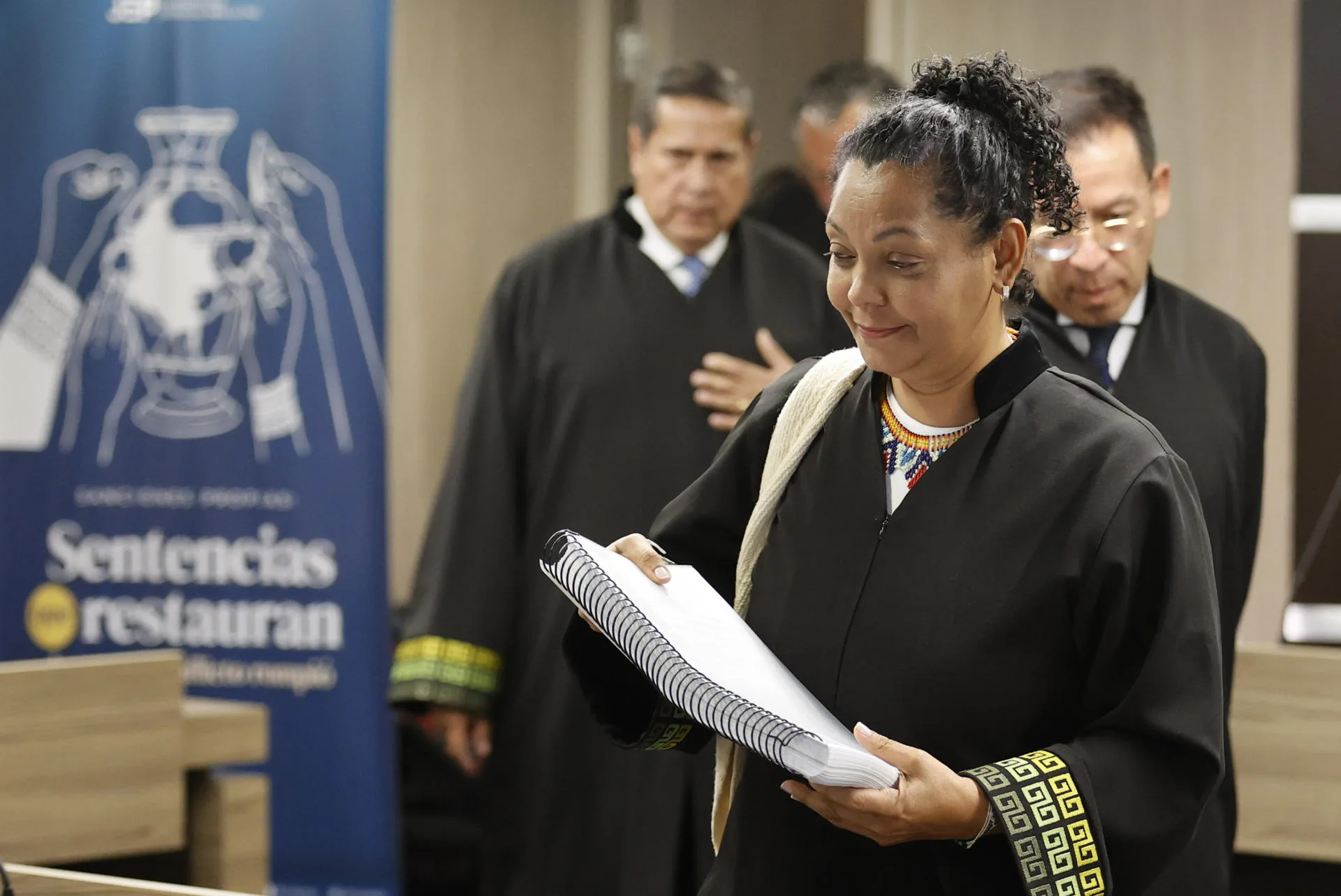
“Given the gravity of the crimes and the role they played, all defendants must serve the maximum eight-year sanction, with proportional reductions for time already spent in detention under ordinary justice,” said Judge Ana Manuela Ochoa Arias when reading the verdict.
Unlike prison terms, the sanctions involve community projects in memory of the victims.
Former soldiers found guilty of ‘false positives’
The ruling targets members of the army’s La Popa Battalion, including majors Guillermo Gutiérrez Riveros and Heber Hernán Gómez, several lieutenants, sergeants, a corporal, and soldiers.
They acknowledged involvement in 135 extrajudicial executions and enforced disappearances between 2002 and 2005, resulting in 192 recognized indirect victims in the regions of Cesar and La Guajira.
“The majority of the victims were young people between 18 and 34, working in agriculture or the informal sector. Their selection reflected economic vulnerability and historical discrimination against campesinos, Indigenous, and Afro-Colombian populations,” Ochoa said.
The crimes, known in Colombia as “false positives,” consisted of civilians lured under false pretenses, killed, and then presented as guerrillas killed in combat to inflate military success.
Soldiers often received rewards such as promotions, medals, or vacation time.
Sanctions focus on restorative work
Instead of prison, the 12 defendants must carry out six restorative projects, including the construction and maintenance of memorials and cultural centers, support for infrastructure, and the rehabilitation of productive spaces, particularly in Indigenous and Afro-Colombian communities.
“These crimes were not isolated acts or the result of individual misconduct, but part of a systematic and widespread practice designed to generate operational reports and cover up international crimes,” Ochoa emphasized.
The case, known as the Caribbean Coast Subcase, falls under JEP’s “Macrocase 03,” which in 2021 identified at least 6,402 people killed and falsely reported as combat deaths nationwide between 2002 and 2008.
Tribunal warns against historical denial
JEP President Alejandro Ramelli underscored the broader impact of the ruling, declaring: “No Colombian should have died as the result of a criminal network designed to select, kill, and disappear innocent people for the sole purpose of turning them into cold, manipulated statistics.”
Ramelli said the tribunal has “literally unearthed the truth from Colombia’s cemeteries” and stressed that the convicted soldiers “had to face justice, confront victims, and reveal horrors that even their own families did not know.”
This is the second ruling applying restorative justice in Colombia.
Earlier this week, the JEP sentenced former FARC commanders, including ex-leader Rodrigo Londoño, to alternative eight-year sanctions. EFE
csr/seo/mcd