
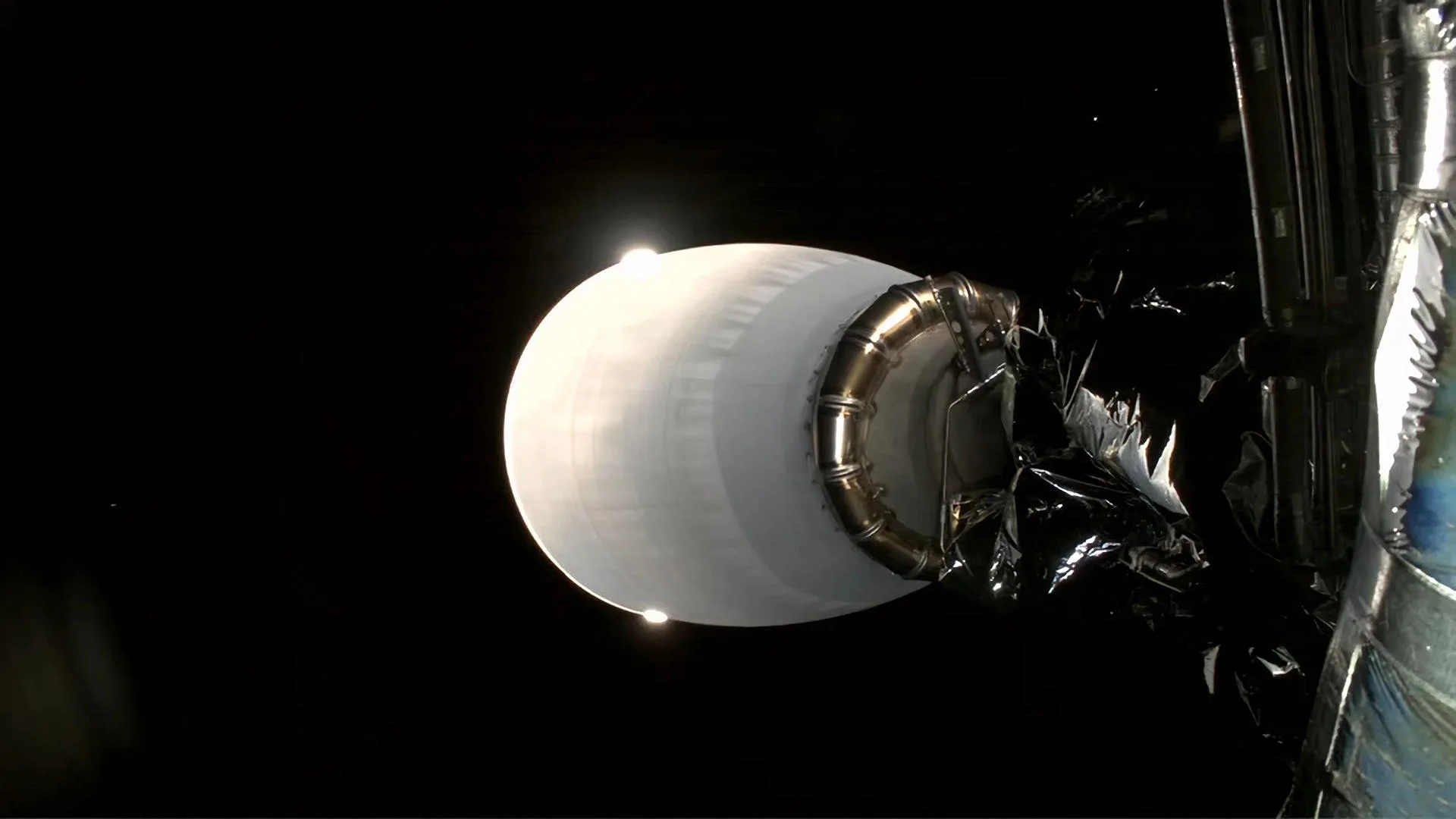
Miami, USA (EFE).- The United States space agency NASA successfully launched three missions into space on Wednesday that seek to map the heliosphere – the layer that surrounds and protects the solar system -, critically track space weather and study how the Earth’s upper atmosphere responds to solar winds.
The three missions took off from Florida on a SpaceX Falcon 9 rocket at 7.31am local time (11.31am GMT) and their destination was Lagrange point 1, a gravitationally stable place between the Sun and Earth and at a distance of some 1.5 million kilometers (around 930,000 miles).
On reaching there, after an estimated 108-day journey, the missions will proceed to study the heliosphere, the solar wind and the exosphere, the upper layer of the Earth’s atmosphere.
The Interstellar Mapping and Acceleration Probe (IMAP) will analyze and map the heliosphere – which is generated by magnetic particles coming from the Sun and that protects the solar system from cosmic radiation – with unprecedented detail.
This region of space has only been crossed by the two Voyager probes, the last one launched into space almost six decades ago, so the space agency’s knowledge of the heliosphere remains limited.

“IMAP will also explore and chart the vast range of particles in interplanetary space, helping to investigate two of the most important overarching issues in heliophysics — the energization of charged particles from the Sun, and the interaction of the solar wind at its boundary with interstellar space,” NASA said on its website.
“Additionally, IMAP will support real-time observations of the solar wind and energetic particles, which can produce hazardous conditions in the space environment near Earth,” it added.
The data collected by the probe, which will be in real time, will also be useful for future manned space missions, such as those of the Artemis program that envisage the return of humans to the Moon, as it will provide essential information about the effects of the solar wind on astronauts.
Another mission includes a satellite from the National Oceanic and Atmospheric Administration (NOAA), which will continuously study the activity of the Sun and monitor the solar wind.
The third one concerns the Carruthers Geocorona observatory, which will analyze the exosphere and map this extensive region. EFE
hbc-bce/sc