
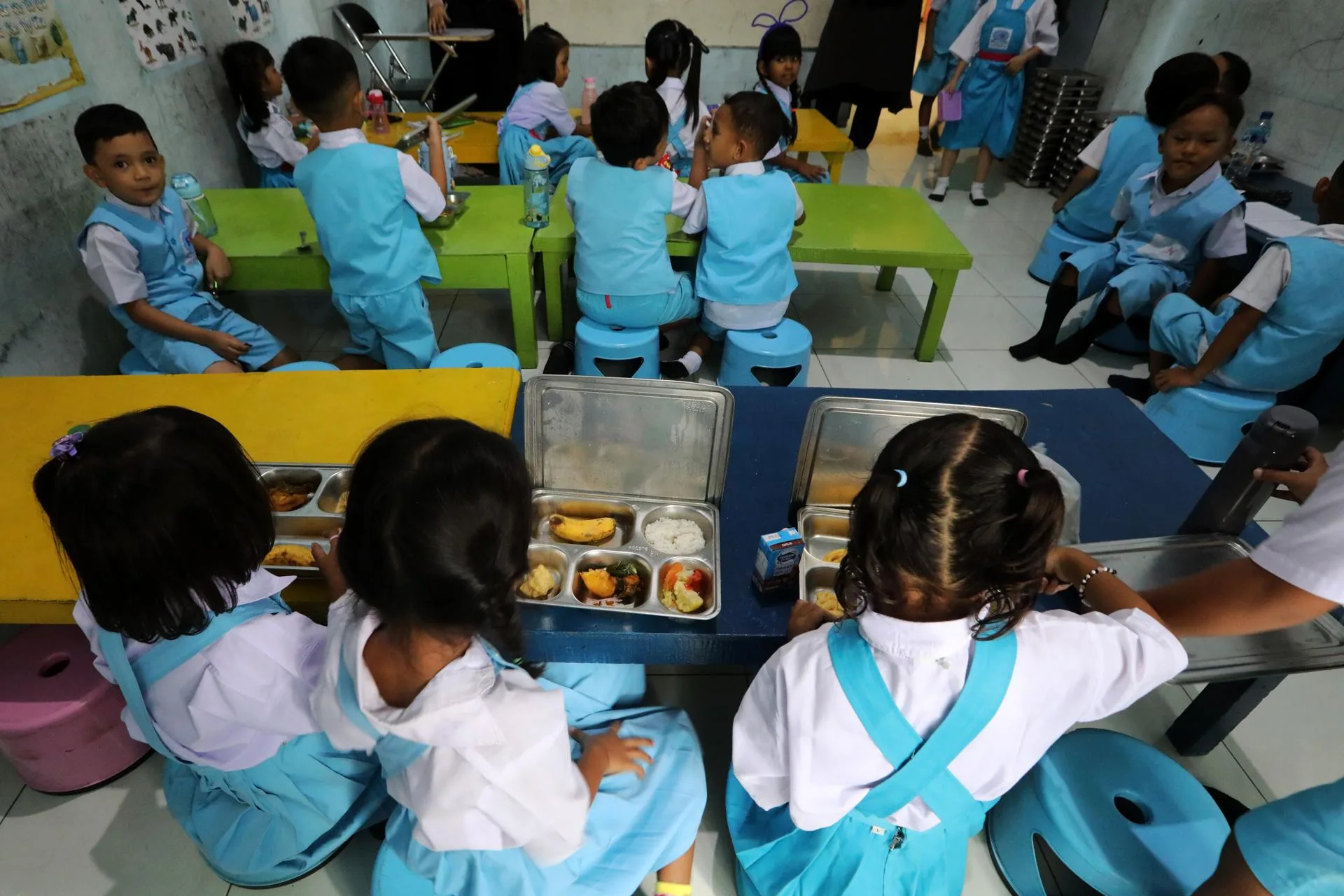
International Desk (EFE).- Indonesia will press ahead with President Prabowo Subianto’s flagship free school meals program, despite nearly 6,000 children suffering food poisoning since its launch in January, officials confirmed Monday.
The government defended the multi-billion-dollar initiative, saying corrective measures are being taken, even as hospitals struggle to cope with repeated outbreaks and critics demand its suspension.
The National Nutrition Agency, which oversees the plan, reported that since January at least 5,914 students aged 6 to 18 had fallen ill after eating school-provided lunches contaminated with bacteria such as Salmonella and E. coli.
The latest outbreak was Friday when 800 students fell ill in West Java, where small hospitals were overwhelmed by the number of sick students.
Symptoms included nausea, dizziness, and abdominal pain.
“We must evaluate those running the program… And the most important thing is how to deal with the students’ trauma after eating the food,” West Java Governor Dedi Mulyadi told local news outlets.
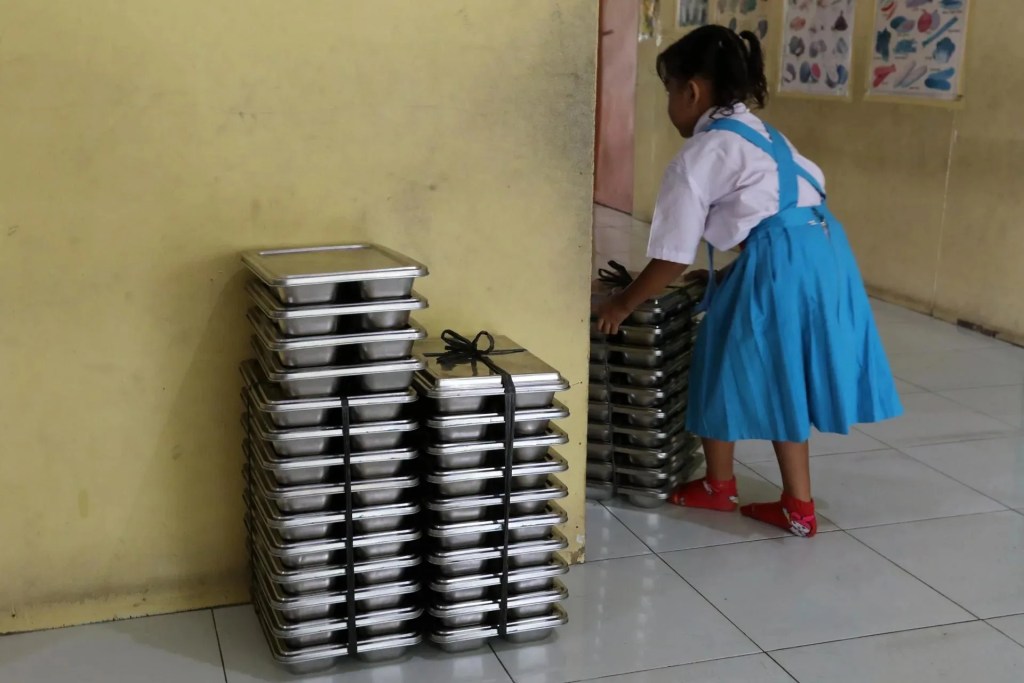
15-year-old student Lisa Bila Zahara described her experience after eating chicken and tofu: “Around 30 minutes later, I felt nauseous and had a headache. I want it stopped. I fear this will happen again.” Her mother has since banned her from eating the free meals.
Despite the health emergency declaration in parts of West Java, the program has already provided meals to 28 million children and aims to reach 80 million by 2026.
Government defends initiative
Cabinet Secretary Teddy Indra Wijaya said on Monday that President Prabowo had given.
“technical instruction to keep the program running” during a meeting with key ministries.
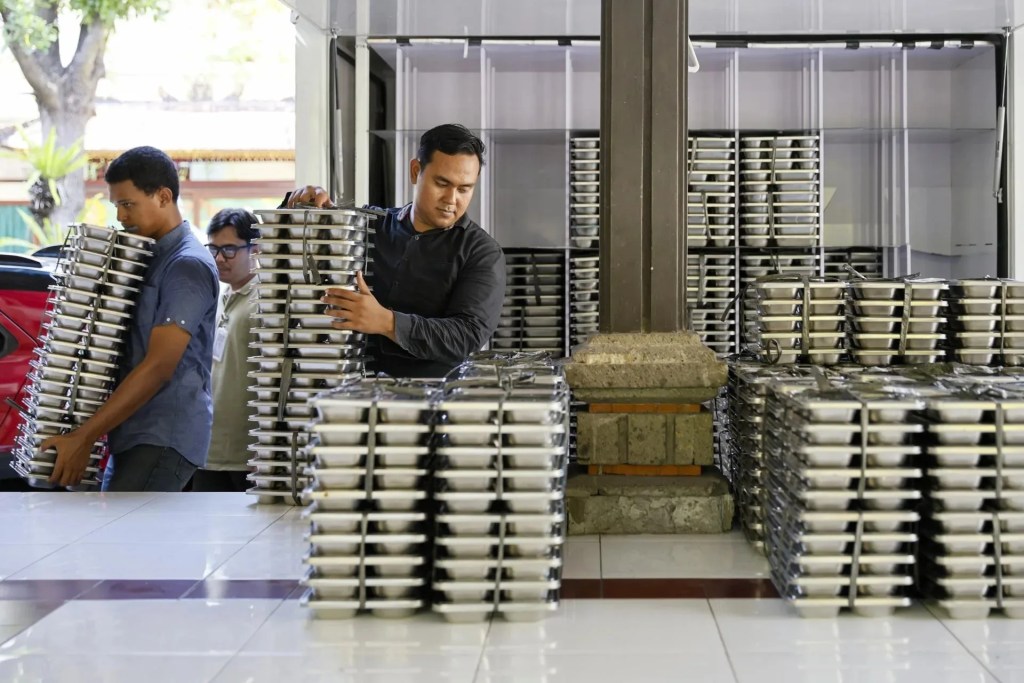
National Nutrition Agency deputy director Nanik S. Deyang confirmed that 40 of the 45 kitchens linked to the poisoning cases have been shut indefinitely, and all participating kitchens must now present hygiene certificates.
A new regulation also requires that every kitchen be led by a certified chef, assisted by a trained aide.
“I apologize on behalf of the National Nutrition Agency and all kitchen units in Indonesia. I am a mother, and seeing these images breaks my heart,” Nanik said in a press conference.
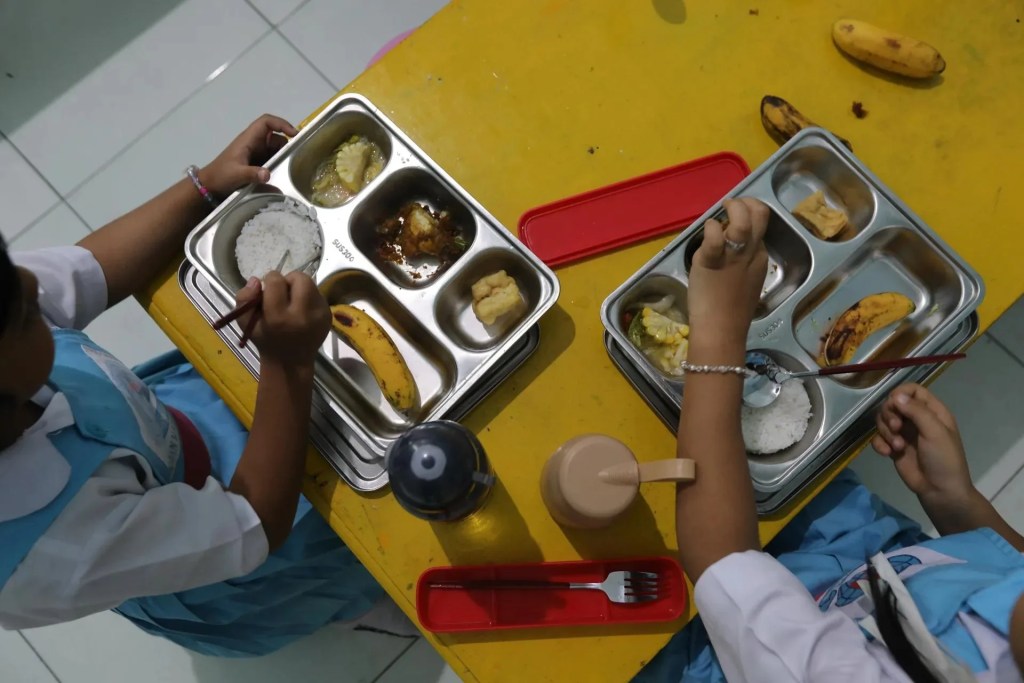
Dadan Hindayana, head of the agency, added that kitchens linked to outbreaks had been suspended, insisting that food preparation followed standard procedures.
Still, Prabowo insists his program is essential to combat child malnutrition.
“This is for the health of our future generations,” he told supporters earlier this year, framing the initiative as both a public health and political priority.
Criticism and nutritional challenges
Civil society groups, including the Indonesian Center for Strategic Development Initiatives, argue that the program should be paused until safety can be guaranteed.
The think tank Network for Education Watch estimates the number of affected children could exceed 7,000 nationwide.
Critics also call the initiative populist, noting that its 30 billion dollar budget comes at the expense of other public programs, sparking mass protests in February demanding more transparency. The budget was set to double in 2025.
Indonesia faces serious nutritional challenges despite being Southeast Asia’s largest economy.
According to UNICEF and the World Food Programme, more than 4.5 million children under five (21%) suffer from stunted growth, while only 2.3% of those aged 5–19 consume adequate fruit and vegetables daily.
Food security in the country remains fragile amid fluctuating prices, the impact of El Niño on rice production, and frequent natural disasters.
On the 2023 Global Hunger Index, Indonesia ranked 77 out of 127 countries. EFE
sh-mca-seo/mcd