
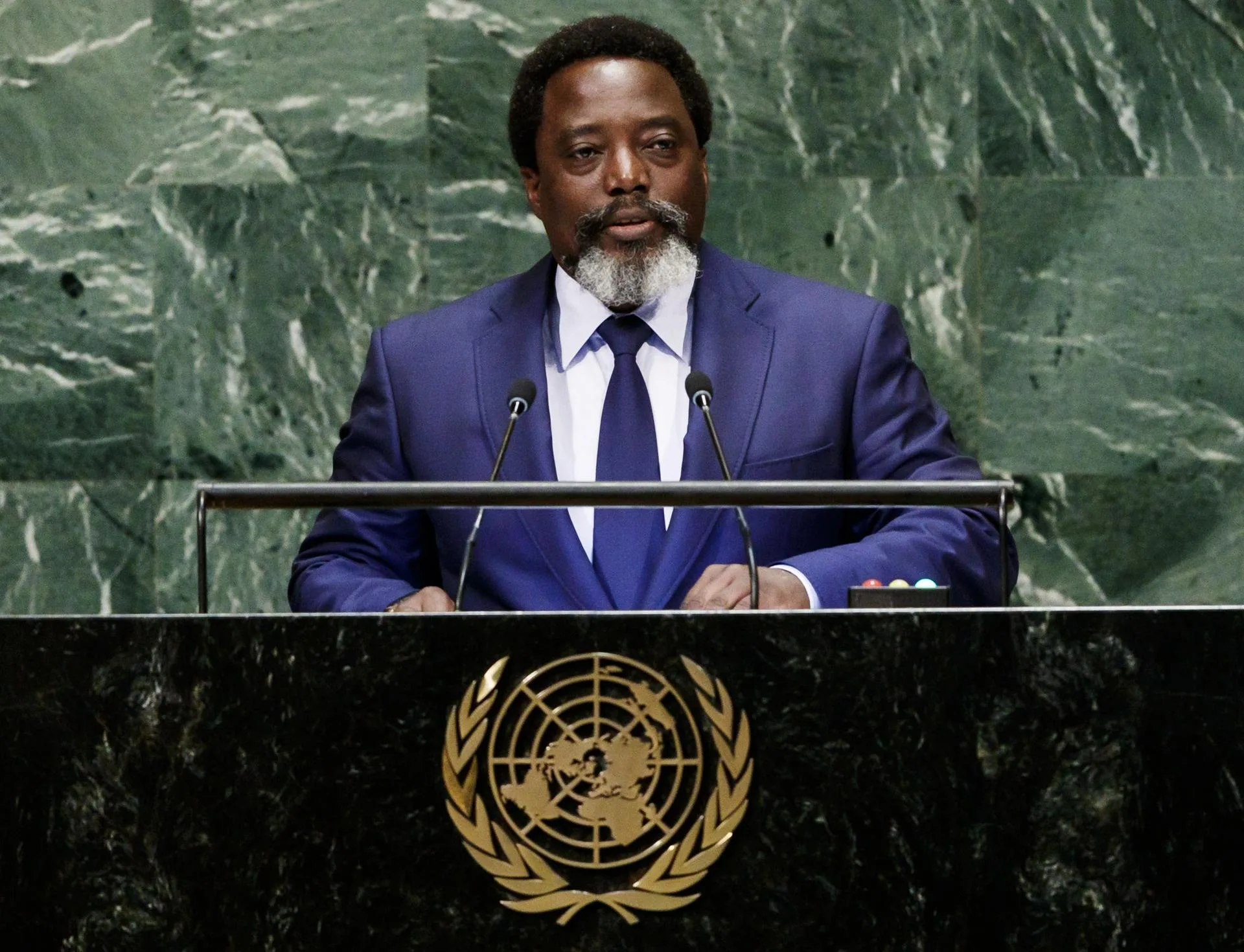
Nairobi (EFE).- The military justice system of the Democratic Republic of Congo on Tuesday sentenced to death former President Joseph Kabila (2001-2019) after being found guilty of treason for supporting the rebel group March 23 Movement (M23), which is fighting against the Congolese army in the east of the country.
The High Military Court in Kinshasa tried Kabila, 54, “in absentia” since Jul. 25 and described him as the “leader” of the Alliance Fleuve Congo (AFC), considered the political arm of the M23.
In August, the auditor general of the Armed Forces, General Lucien René Likulia, requested the death penalty for Kabila, considering him the intellectual author of the violence perpetrated by the M23, which is backed by neighboring Rwanda, as confirmed by the United Nations and several countries.
Kabila was convicted of treason, participation in an insurrectional movement, crimes against peace and humanity, murder, rape, conspiracy, and incitement to war crimes without any mitigating circumstances.
“In application of Article 7 of the Military Penal Code, the court dictates the most severe penalty: death,” the court stated in the sentence.
Civil parties to the prosecution, including several eastern provinces affected by M23 violence, requested that the charge of treason be replaced with espionage, in addition to seeking life imprisonment and a 30 billion dollar fine against the former president.
Ultimately, the Congolese justice system ordered Kabila to pay 33 billion dollars in damages: 29 billion to the Congolese state and 2 billion to each of the provinces of North Kivu and South Kivu in eastern Congo, which were affected by the M23 offensive.
On May 22, the Senate withdrew Kabila’s immunity at the request of the military prosecutor. The following day, the former president denounced the “authoritarian drift” and the “collapse of institutions” in the DRC in a speech delivered from an unknown location.
Meanwhile, in April, the government suspended the activities of his party, the People’s Party for Reconstruction and Democracy, and seized its assets under the accusation of collaborating with rebels.
After 18 years in power, Kabila has remained outside the country in self-imposed exile since late 2023, primarily in South Africa, following a long period of silence since his departure in 2019.
In April, he announced his return to the DRC to “contribute to a solution” to the crisis in the east. In May, he traveled to Goma, the capital of North Kivu province, which has been under M23 control since January 2025.
The prospects for a negotiated solution to the conflict rekindled with the signing of a peace agreement between the DRC and Rwanda at the ministerial level in Washington on Jun. 27, as well as with the declaration signed by the government and the M23 in Doha on Jul. 19; however, the violence continues.
Since 1998, the eastern part of the DRC has been embroiled in a conflict fueled by rebels and the army, despite the presence of the UN peacekeeping mission (MONUSCO). EFE
lbg/dgp/mcd