
By Nuria Garrido and Patricia Martinez

Jerusalem, Oct 7 (EFE).- Tuesday marked exactly two years since the war in the Gaza Strip broke out on Oct. 7, 2023, with the Islamist group Hamas entering Israeli territory and killing some 1,200 people and taking some 251 others hostage, during which the Nova music festival was the main target.

That attack was followed by a strong Israeli offensive against the Gaza Strip, bringing great destruction in the region, prompting widespread criticism from most sections of the international community and human rights groups.

Casualties

The official death toll in the Palestinian enclave has already crossed 67,000 during this period.
Around 20,000 children have died in the war, signifying an average of more than one child killed every hour, according to the Gazan Ministry of Health.
Of the little more than two million inhabitants of the Strip, it is estimated that more than 10 percent have been killed or wounded in the conflict.
Hunger and malnutrition
More than 450 Gazans have died of hunger and malnutrition, a third of them children, according to the Gazan authorities.
On Aug. 22, the UN confirmed the existence of a famine in the governorate of Gaza – where the capital is located -, after experts warned that more than 640,000 Gazans were facing “catastrophic” levels of food insecurity.
Since March, Israel has been blocking the large-scale entry of humanitarian aid through UN trucks. During these two years, relief materials, including food tents, medicines and fuel, have been trickling in through the borders.
Destruction and displacement
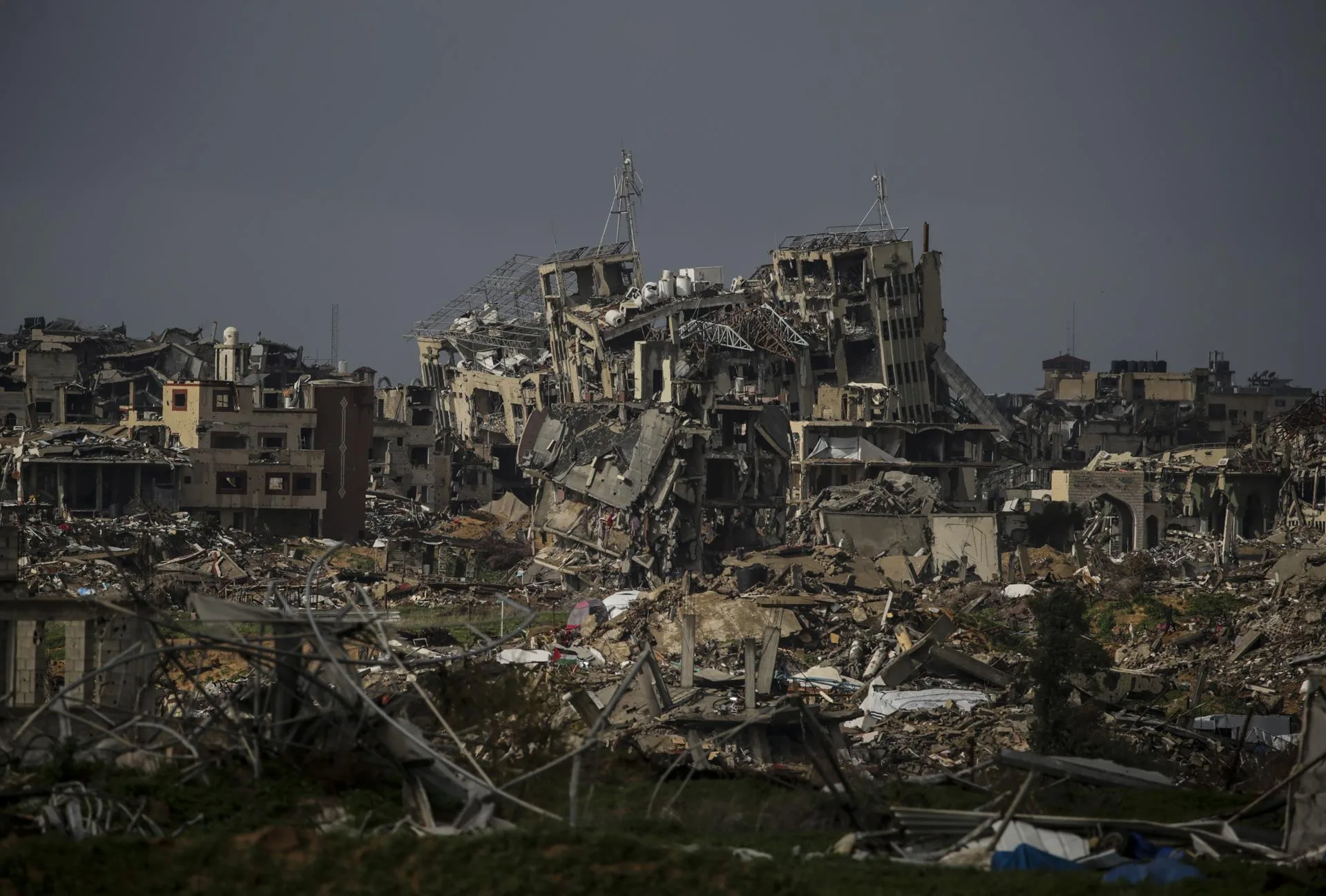
According to UN estimates, some 92 percent of the houses in the Gaza Strip have been destroyed by the Israeli forces, who now control some 82 percent of the enclave.
Just 14 of the 36 hospitals in the Strip remain functional, even though only partially. Most of the population have been displaced multiple times during these two years.
Israel continues to systematically destroy buildings and houses in the capital, having razed the north of the enclave – Jabalia, Beit Hanoun and Beit Lahia have been completely destroyed – and the southern city of Rafah.
Media casualties
Israel has banned foreign press from entering the enclave, and only allowed restricted access under army supervision to selected areas, without the possibility of seeing or interacting with the Gazan people.
The Hamas-controlled Gazan government has accused Israel of systematically targeting Palestinian journalists, killing at least 252 of them.
The nonprofit Committee to Protect Journalists has documented 197 cases of media personnel killed in the conflict.
Genocide allegations, recognition of Palestinian state
In November 2024, the International Criminal Court issued an arrest warrant for Israeli Prime Minister Benjamin Netanyahu for war crimes and crimes against humanity, including the use of starvation as a weapon of war.
Over the last one year, Israel has found itself getting increasingly isolated with global protests – including in multinational sporting, academic and cultural events – against its atrocities in Gaza.
A UN committee and human rights organizations have described Israeli actions in Gaza as genocide, which several countries such as Brazil have reiterated.
Others, such as Colombia, have broken diplomatic relations, while Spain has imposed an embargo on defense deals with Israel.
Moreover, 20 countries have formally recognized the State of Palestine since October in 2023, including historical allies of Israel such as the United Kingdom and France. Israel has stressed that the State of Palestine will never become a reality. EFE
ng-pm/sc