
By Milo Milfort
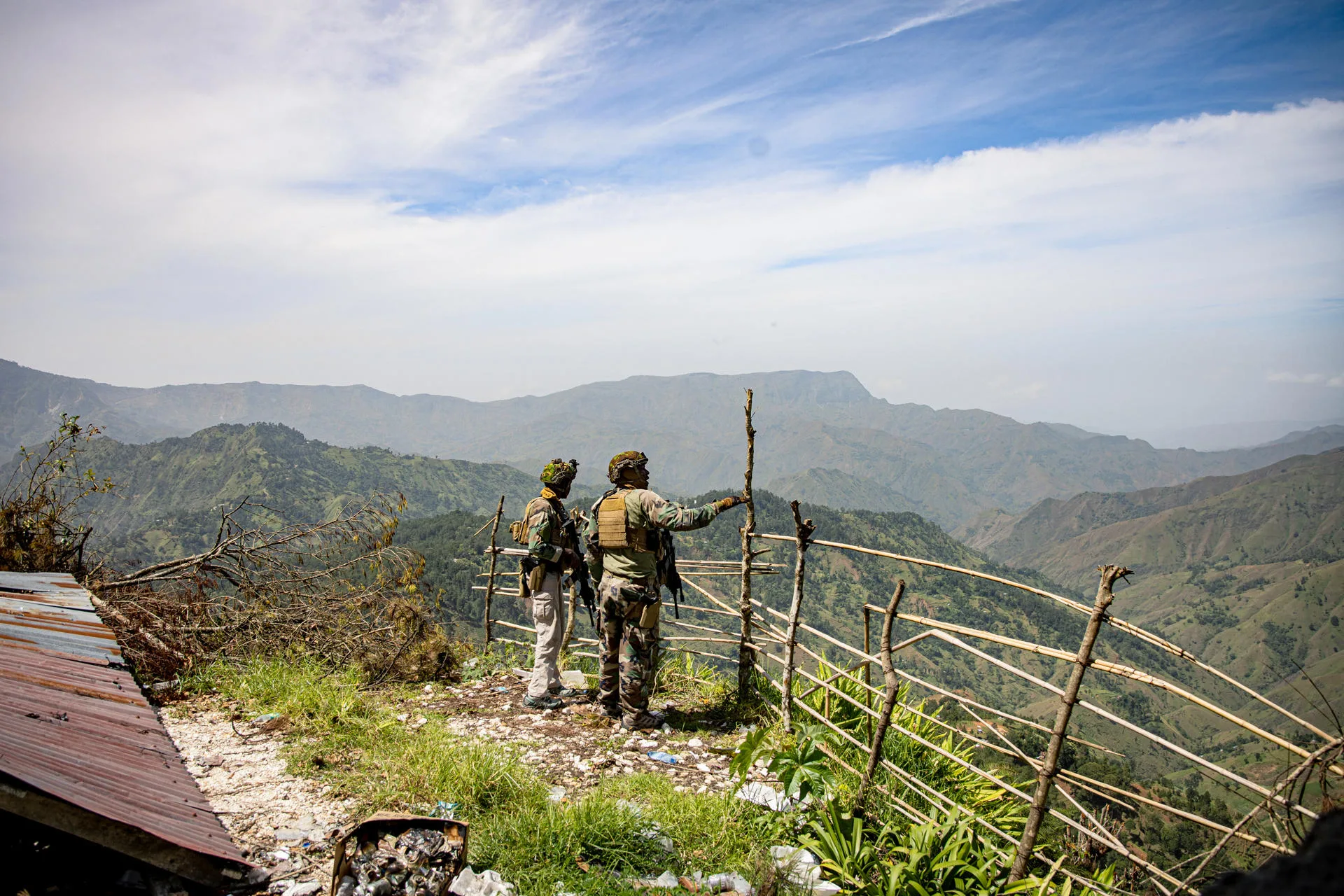
Port-au-Prince (EFE).- Haitian security forces killed and seriously wounded hundreds of members of armed gangs controlling Port-au-Prince with kamikaze drones in 2025.
However, this strategy is insufficient to stabilize the country, which is in the grip of a violent crisis that left at least 1,520 people dead and 609 wounded in the second quarter of 2025 alone, according to activists.
Drones killed at least 300 armed gang members and over 400 were wounded, some seriously, in the last five months, according to data from the non-governmental organization National Human Rights Defense Network (RNDDH).
The latest report from the United Nations Integrated Office in Haiti (BINUH) states that at least 814 people were killed and 449 wounded during operations by Haitian security forces between April and June 2025, 36% of them by explosive drones.

In early March, Prime Minister Alix Didier Fils-Aimé announced the creation of a working group to conduct large-scale operations against gangs, initiated by the Prime Minister’s office and the Transitional Presidential Council (CPT), and involving the use of kamikaze drones.
These operations began in Delmas 6, the stronghold of the gang leader Jimmy Chérizier, also known as Barbecue, a former police officer who escaped but lost several subordinates.
NGO questions drones’ lack of precision
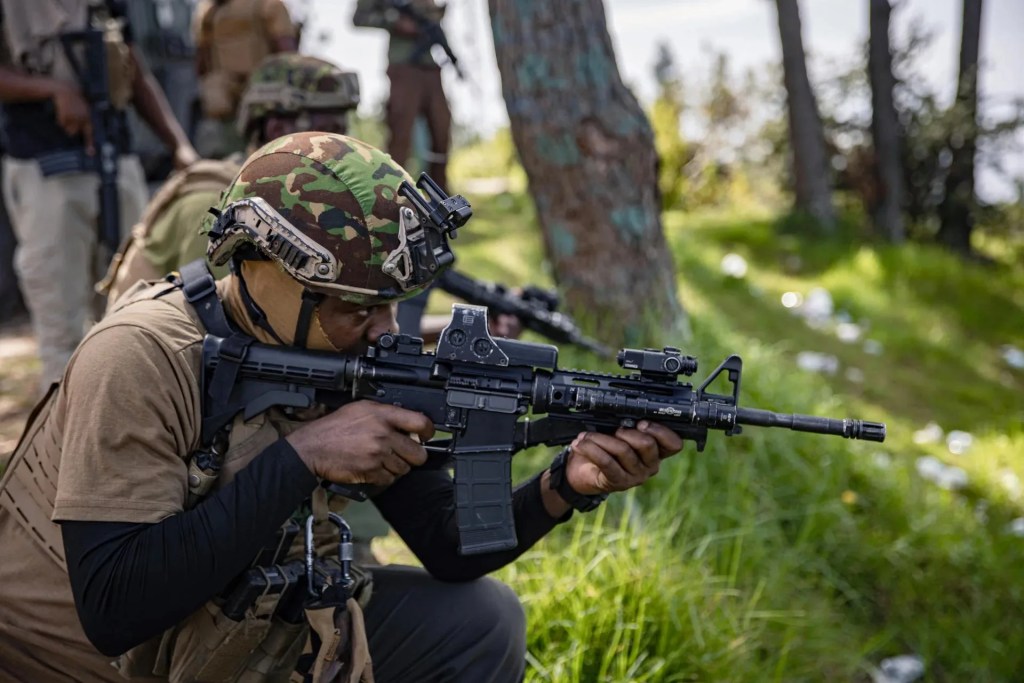
Some 360 agents assigned to specialized units of the Haitian National Police (PNH) have received training on the use of this equipment from the French police unit Recherche, Assistance, Intervention, Dissuasion (RAID), which specializes in high-risk interventions. The PNH have also acquired a drone unit in parallel.
However, it seems that they have not yet achieved sufficient precision to hit their target, the gang leaders.
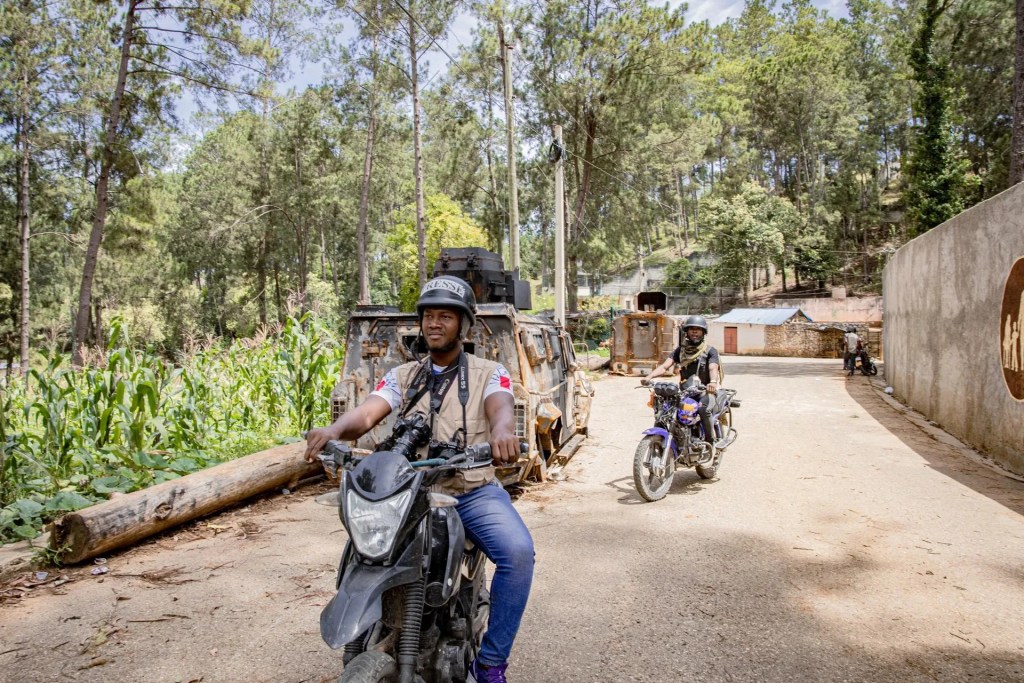
“The results so far do not seem conclusive to us. In any case, they are not enough,” said Marie Rosy Auguste Ducéna, Program Manager for the RNDDH, in an interview with EFE.
She does not rule out the possibility that gang leaders receive information before the attacks.
“So far, it makes no sense to us that interventions are carried out blindly. Even when conducted at random, the gang leaders manage to escape. We hope it’s just a matter of precision,” she added.
Collateral damage
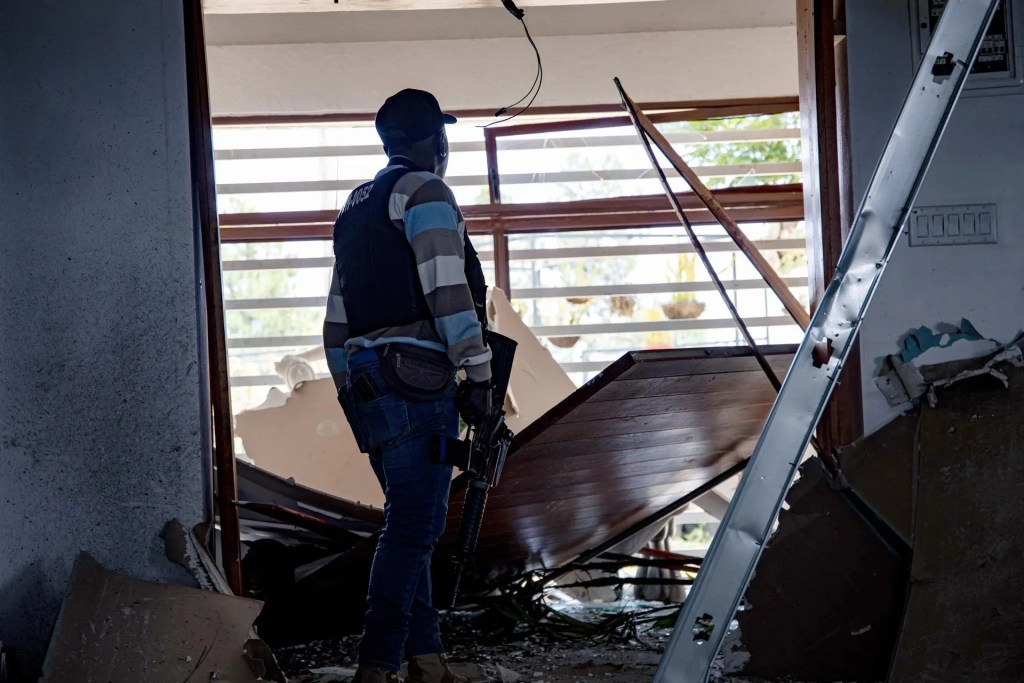
In addition, Auguste Ducéna noted that, since kamikaze drones are remotely piloted, they can cause considerable collateral damage. For example, on Aug. 19, two officers from the National Police’s SWAT special operations units in Kenscoff, east of Port-au-Prince, died in an “accident” involving one of these devices.
Preliminary reports indicated that the drone exploded while residents were transporting it “in a gesture of good faith,” prompting the PNH to launch an investigation into the incident.
However, the National Police Union questioned the official version of events, stating that “the situation is more worrying than it appears.”
“Even if these are remotely piloted drones, the pilot must try to be as precise as possible to avoid causing collateral damage,” said Auguste Ducéna.
In its latest report, BINUH said that the neighbourhoods of Grande Ravine, Martissant, and Village-de-Dieu were affected by an intensification of security force operations and an increased use of explosive drones by the authorities.
Although this new dynamic prevented gangs from expanding their territorial control, they continued to commit abuses against residents in the neighbourhoods they already controlled, according to the UN Office.
The Office also criticized the lack of official communication regarding the existence, mandate, or composition of the working group responsible for managing the use of drones during law enforcement operations on the ground. EFE
mm/dgp/seo