
![[FILE] A guest wears the India and United States Flags as he waits for Indian Prime Minister Narendra Modi and US President Donald J. Trump to speak at the 'Howdy Modi' community summit at NRG Stadium in Houston, Texas, USA, 22 September 2019. The event was hosted by the Texas India Forum. (Estados Unidos) EFE/EPA/PATRIC SCHNEIDER](https://pre.efe.com/wp-content/uploads/2025/09/rss-efef2862b5c54af5ee7866e42a0d5e993811e5ac45dw.webp)
By Mikaela Viqueira
Los Angeles, US (EFE).- President Donald Trump’s decision to slap steep tariffs on India has shaken Washington’s strategic partnership with its key Asian ally, undermining US efforts to counter China’s growing influence and prompting New Delhi to cautiously rekindle ties with Beijing and Moscow.
India has increasingly emerged an alternative to China in global supply chains, particularly as the US pursues economic “decoupling” from Beijing.
The country, whose main export destination is the US, had been deepening its partnership with Washington.
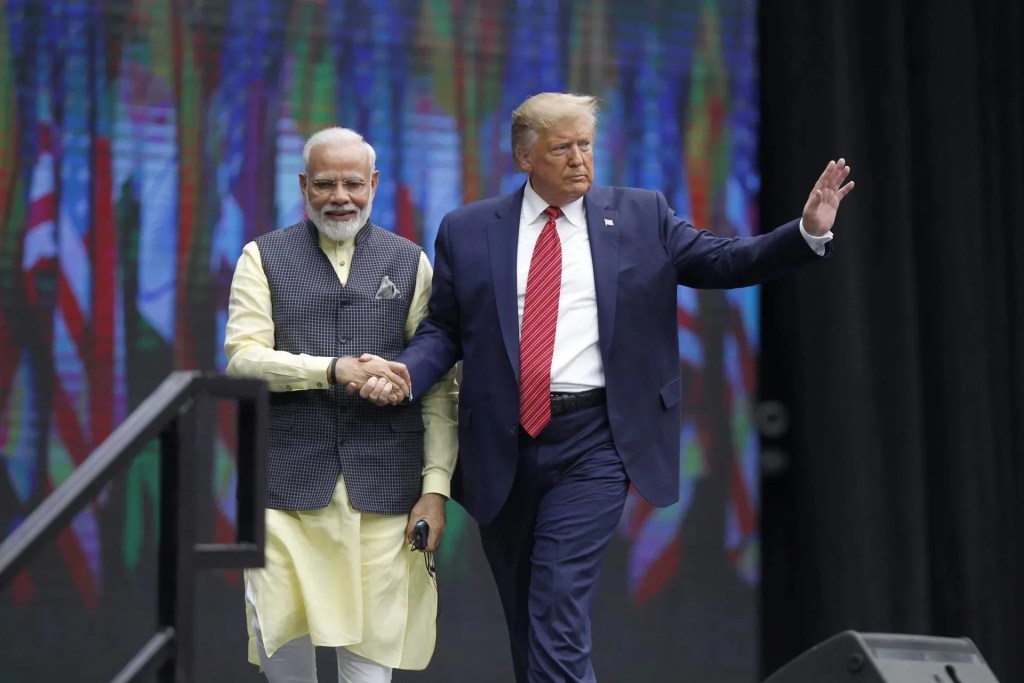
During Prime Minister Narendra Modi’s first visit to Washington in Trump’s second term in February, both sides agreed to double bilateral trade to $500 billion by 2030.
“Considering India’s military and economic weight today, and especially in the future, it is a smart decision to deepen this relationship, even if that means for now we give more than we receive,” Richard M. Rossow, senior advisor at the Center for Strategic and International Studies (CSIS), told EFE.
But analysts warn that the tariff shock could undo decades of trust-building.
“This will not only disrupt relationships built over the last quarter century, but will also take a long time to recover,” Salil Tripathi, chief global advisor at the Institute for Human Rights and Business (IHRB), told EFE.
India reopens doors to China
Instead of bowing to Washington’s pressure, India has turned to its Asian rival.
At the 25th Shanghai Cooperation Organization summit this week, Modi appeared in step with Chinese President Xi Jinping and Russian President Vladimir Putin, a striking image of cooperation shared widely on social media.
The show of unity led Trump to claim on Friday that he had lost both India and Russia, despite recent attempts to involve them in ending the war in Ukraine.
Hours later, he softened his tone, insisting he was very disappointed that India bought so much oil from Russia but would maintain good relationship with Modi.
“I’ll always be friends with Modi, he’s a great Prime Minister,” Trump said, noting that he just did not like what the Indian prime minister was doing.
“But India and the United States have a special relationship. There’s nothing to worry about. We just have moments on occasion.”
Limits of India–China rapprochement
Analysts caution, however, that any thaw between India and China will remain limited. “India has greater security and commercial concerns with China that surpass current tensions with Washington,” Rossow explained.
At the same time, India cannot realistically grow its technology manufacturing sector without some level of trade with China, given Beijing’s dominant role in producing raw materials and intermediate goods.
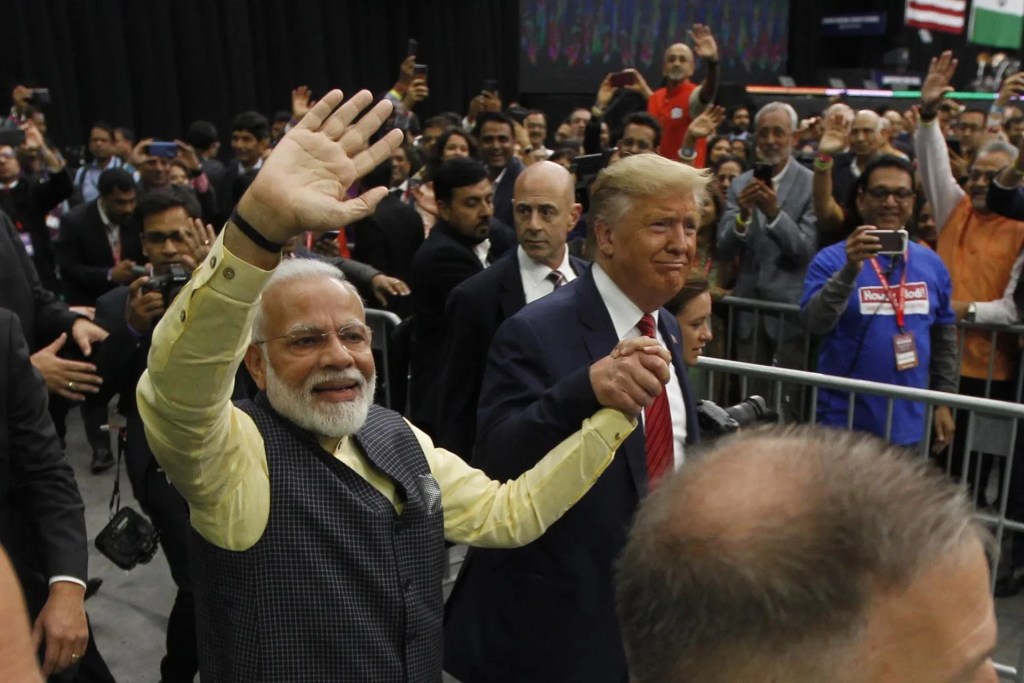
Domestically, India’s economic performance appears strong, but inequality is rising and GDP growth is uneven, Tripathi noted.
Washington’s tilt toward Pakistan
Further complicating matters, Washington signed a trade deal with Pakistan in late July, reducing tariffs for India’s archrival.
Combined with the new duties on Indian exports, this has deepened mistrust in New Delhi.
“Indian foreign policy is at a critical juncture,” Tripathi said. “Its relations with China are lukewarm, Russia remains an ally but is also strengthening ties with Pakistan, and the US is sending mixed signals. Difficult times are ahead.” EFE
mvg-sk