
By Rostyslav Averchuk
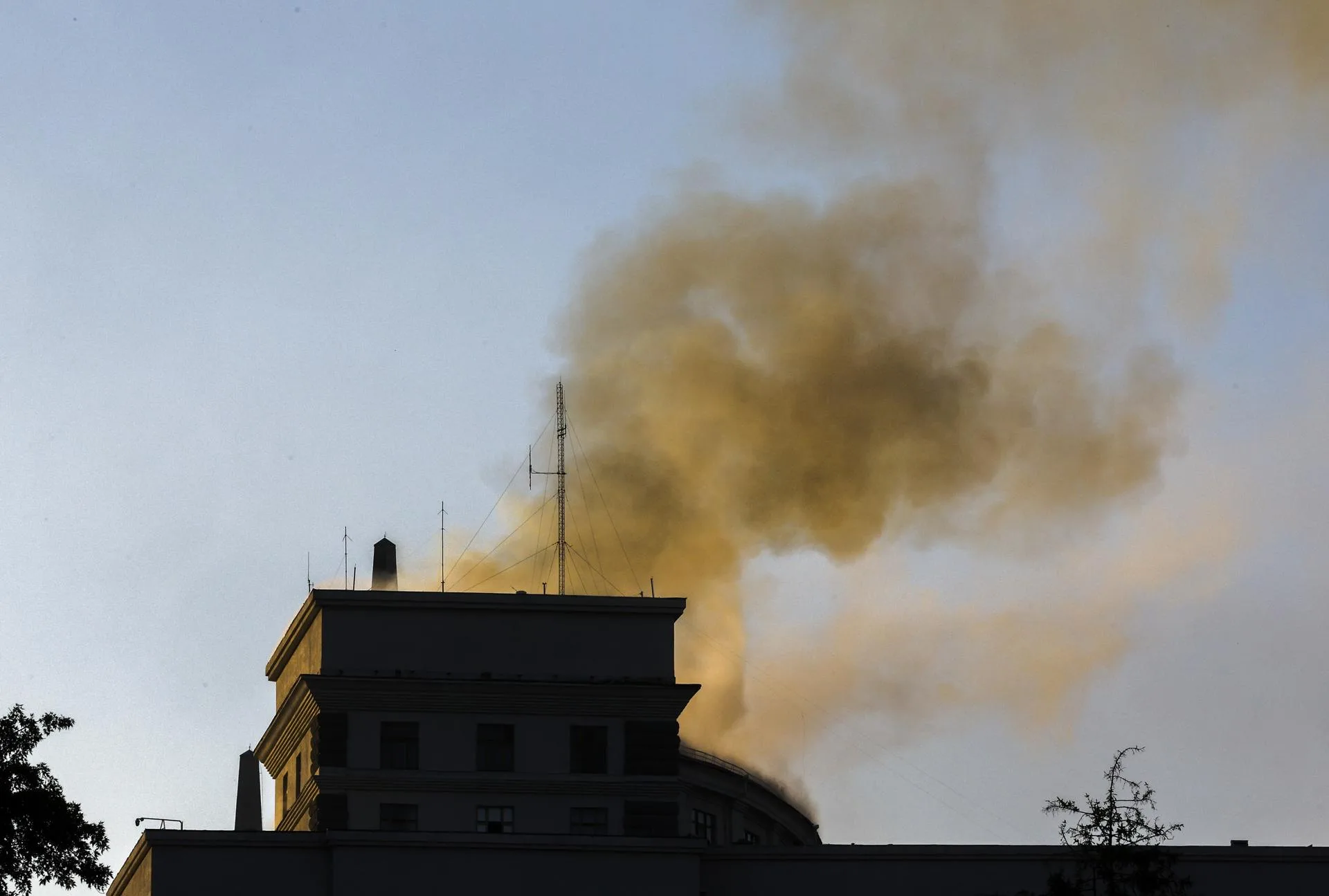
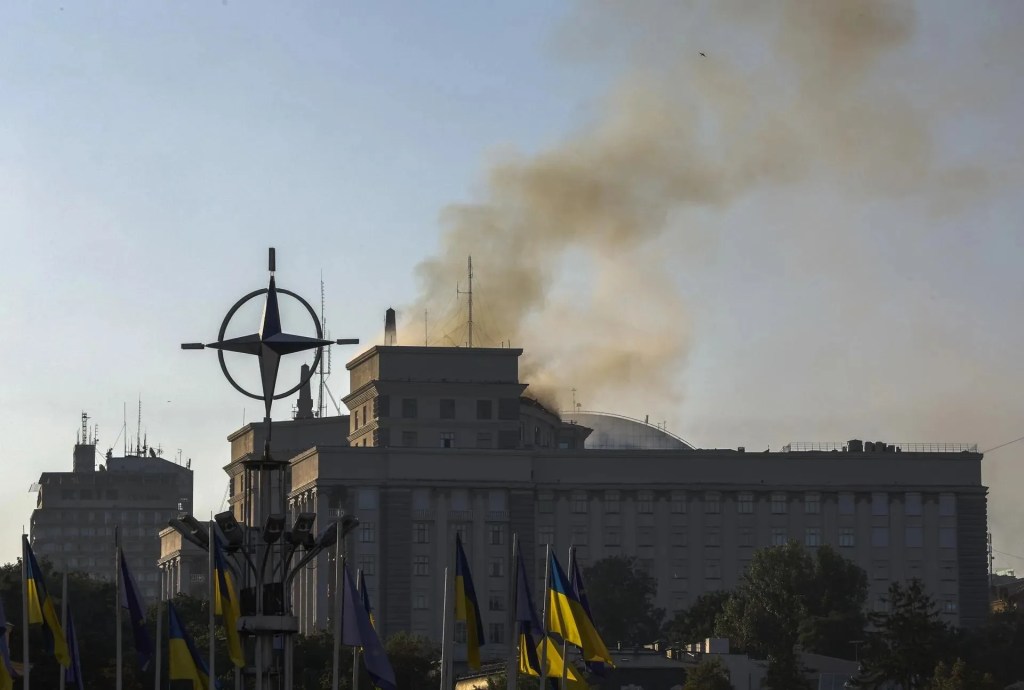
Lviv (EFE).- Russia’s first-ever strike on a government building in central Kyiv has heightened fears about Ukraine’s ability to counter increasingly intense Russian aerial assaults, prompting urgent calls from Ukrainian leaders for enhanced air defense support from international partners.
Russia’s record attack, involving 810 drones and 13 missiles on Sunday, signals its continued intent to overwhelm Ukraine’s strained air defenses, military analyst Oleksandr Kovalenko, from the Information Resistance Group, told EFE.
He considers that Moscow deliberately targeted the government to retaliate for painful Ukrainian strikes on Russian oil refineries while spiking pressure on Kyiv to accept its ultimatums.
Kovalenko and other experts warn that another large-scale attack is likely to happen soon, with Russia holding over 2,800 Shahed and decoy drones in reserve and on course to launch such attacks every few days.
Escalating Russian tactics
Amid the escalation, both sides continue a dynamic race to adapt to each other’s changing tactics.
“Even the most advanced, multi-layered net of air defenses cannot guarantee complete protection,” Kovalenko underlined in reference to the strike against the government building.
Vadym Skibitskyi, deputy head of Ukraine’s Military Intelligence (GUR), told Ukrinform on Sunday that Russia is continuously refining its missiles and drones to make them less vulnerable to Ukrainian air defenses and more destructive.
According to Ukrainian officials and experts, Russian drones often change their trajectories, travel at unusually high or low altitudes, and carry advanced devices, often of Western origin, that guide them towards intended targets despite radioelectronic interference.
In August, 17% of long-range suicide drones breached Ukrainian defenses, up from 3% in January, though the rate has stabilized since March, when 15% were not intercepted.
Ukraine, meanwhile, faces shortages in short, medium, and long-range air defense systems, as well as radio-electronic defenses, Kovalenko notes.
It means that an increasing number of Russian drones can evade them as the scale of the attacks grows.
Moreover, this forces Ukraine to hold the available systems near Russia’s key targets and densely populated areas instead of intercepting the drones and missiles on their way through Ukraine’s territory.
Still, Ukraine also intercepted a record 747, or 92% of all the Russian drones launched on Sunday, showcasing significant progress in its air defense capabilities, Kovalenko noted.
Strengthening defenses
On Sunday night, President Volodymyr Zelenskyy announced that over 150 drones were shot down using interceptor drones. This technology has emerged in response to the shortage of conventional systems and to adapt to Russia’s evolving tactics.
50-70% of these interceptors successfully hit their targets, according to military blogger Sergiy Sternenko, who helps equip Ukrainian forces with them through crowdfunding.
Rustem Umerov, head of Ukraine’s National Security and Defense Council, announced a meeting of the country’s top political and military leadership this week to focus on scaling up interceptor drone production.
Ukraine is also deploying modern fighter jets, such as F-16, to counter drones and missiles, according to Yuriy Ignat, spokesman for Ukraine’s Air Forces.
“We lack resources, but we are working to boost our capabilities, both with international support and domestic production,” Kovalenko underlined to EFE.
Looming threats
Analysts warn that Russian attacks aim to sow fear among Ukrainians to pressure them into accepting Moscow’s ultimatum. Kovalenko also highlighted a renewed focus on Ukraine’s energy infrastructure.
On Monday, the Trypilla thermal power plant in the Kyiv region was attacked by “Shahed” drones, following a string of strikes across the country in the last few weeks, which have only caused local short-term power cuts so far.
Russia is producing 6,000 such drones monthly, and while drones are its weapon of choice, it also retains sufficient missile production for combined aerial attacks, Kovalenko noted.
Successful Ukrainian operations, such as “Spiderweb,” have targeted Russia’s strategic aviation, forcing Moscow to use its aging air fleet, capable of launching cruise missiles, sparingly.
However, Russia can still rely on its Iskander-M, Iskander-K, and Kinzhal missiles. Ukraine only has a limited number of Patriot systems capable of reliably intercepting them. EFE
ra/dgp