
By Ahmed Awad
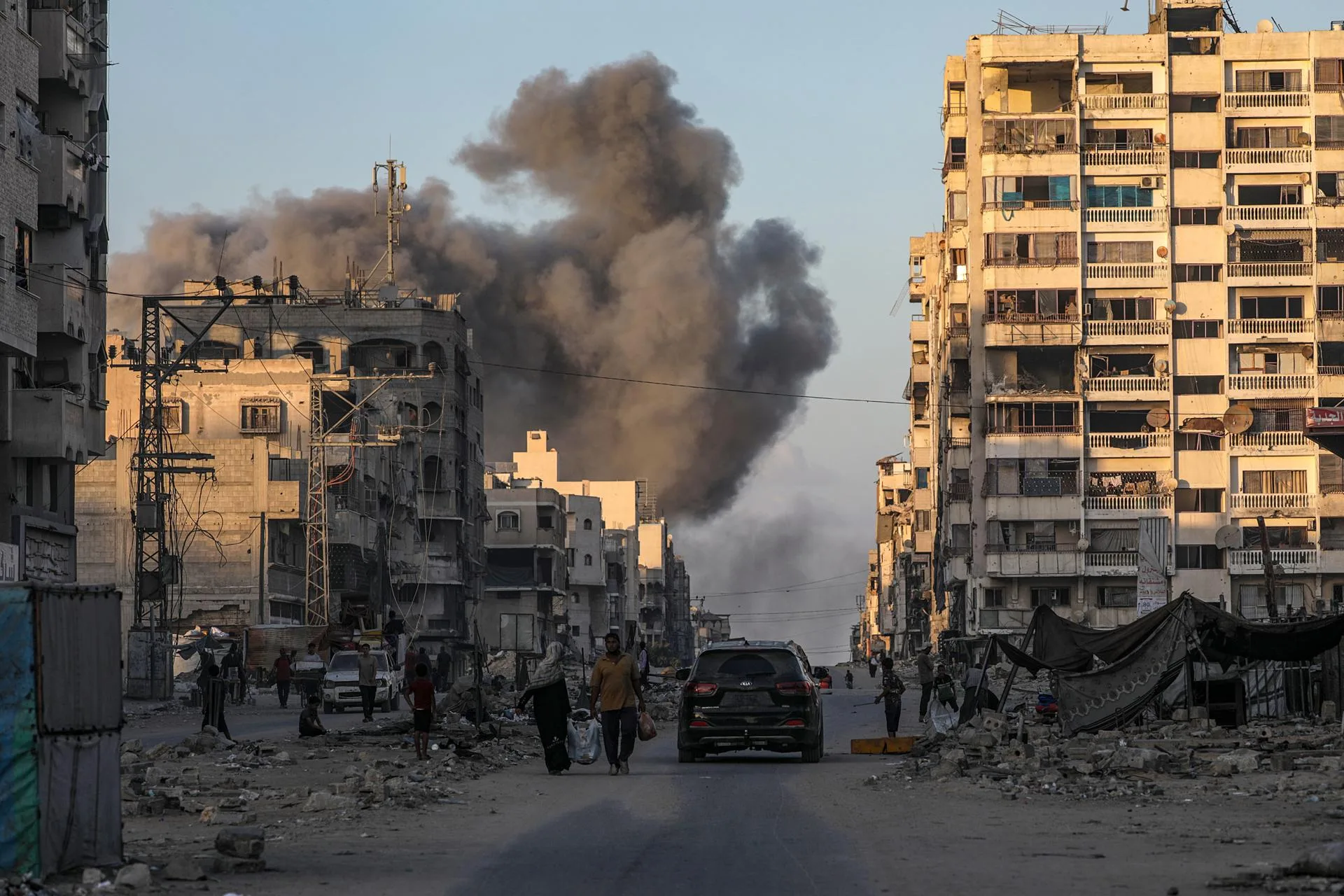
Gaza City (EFE).— The Al Rantisi Hospital, Gaza City’s last pediatric facility, was struck by Israeli drones earlier this week, forcing most patients to flee in panic and leaving the once-busy center nearly deserted. Medical staff and families now vow to stay despite the growing risks and shortages.
The hospital, recently renovated, used to receive around 350 patients a day, according to nutrition department chief Ahmed Basal.
When EFE visited on Thursday, only 17 remained. “Suddenly, they dropped a bomb, causing panic among patients. We tried to control the situation, but then three more bombs fell,” recalled nurse Regad Abu Auda.
At the time of the attack, about 80 patients were inside. “A mother holding her child’s hand kept repeating, ‘Where do I go? What do I do?’” Abu Auda said. Some children in intensive care, hooked to ventilators, could not leave the building.
Families caught in the crossfire
Among those still inside is Manar Zaki al Batran, whose daughters Lara and Aya have been hospitalized for four months.
Aya suffers from cerebral atrophy and depends on artificial respiration, while Lara developed paralysis during treatment.
“When the bombs hit, the dust filled the place. My daughter suffocated and suffered a lot. I tried to take her out, but she cannot move and is connected to machines,” Manar said, exhausted. She added, “When I call Lara in the morning, she doesn’t open her eyes.”
Doctors recommended that Lara be transferred abroad, but medical evacuations from Gaza require multiple approvals from local authorities, the World Health Organization, receiving countries, and Israel.
“I have been waiting four months. She cannot breathe on her own. Her condition has worsened, and I suffered a lot with her,” Manar explained.
“Better to die with my daughter inside the hospital than risk her life outside,” she added. “I will not leave Al Rantisi even if we are besieged.”
Doctors warn of shortages
Despite staff resilience, doctors warn the hospital is on the brink of collapse. “Essential medicines are unavailable.
Intravenous solutions and blood transfusions are also running out,” Basal said. The bombing damaged the hospital’s network, cutting off internet access, and water tanks were hit, leaving patients with a limited supply.
“Children staying overnight do not get breakfast or dinner. How can a small child be denied food? How can staff who spend 24 hours here be left without meals?” Basal asked. Electricity is also scarce, and he fears the hospital’s generator could be targeted.
Nurse Abu Auda said she is mentally prepared if Israeli forces encircle the hospital: “Our duty is to stay at our posts.”
Basal, who remembers his father’s business ties with Israelis before the 2005 Gaza withdrawal and subsequent blockade, reflected: “I never imagined I would live these circumstances in Gaza.” EFE
aa-pbj-ms/rf/seo