

By Núria Morchón
Vienna, Sep. 28 (EFE).— The world’s only museum dedicated to contraception and abortion is marking 22 years since its opening in Vienna, continuing to educate new generations on reproductive rights while recalling a past when women risked their lives with knitting needles or toxic substances to end pregnancies.
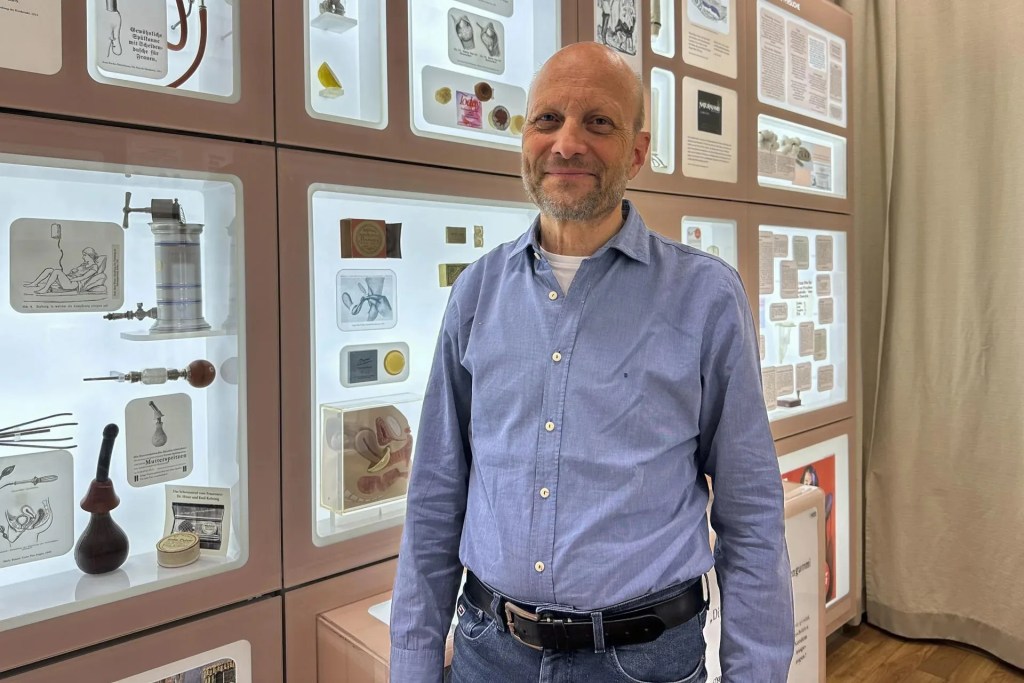
Founded in 2003 by Austrian gynecologist Christian Fiala, the Museum of Contraception and Abortion (MUVS) seeks to highlight the struggle for fertility control and the importance of safe access to reproductive healthcare at a time when abortion rights remain contested across many countries.
Teaching history and awareness
“The mission is to explain the struggle for fertility control and how humans learned to limit births,” said Fiala, noting that without contraception, women could have on average “12 to 15 children.”
He argues that teaching history is key for younger generations to understand why contraception and abortion matter.
“Nature is not kind, but rather brutal,” he told EFE during an interview marking the Global Day of Action for Safe and Legal Abortion. “Young people must understand that they need protection from nature, like using a raincoat to stay dry. There is no natural protection against pregnancy.”
The museum collaborates with schools and universities, receiving up to 30 student groups each month.
Exhibitions take visitors “from the past to the present,” Fiala said, aiming to ensure they are “in a position to act and decide for themselves.”
Global challenges and unsafe abortions
Despite major advances in Europe, abortion remains restricted or criminalized in many regions of the world.
Fiala is sharply critical of the Catholic Church, monarchies, and dictatorships that imposed restrictions on reproductive rights “for moral reasons or simply to increase population.”
He also stresses the colonial legacy: “Countries in Latin America, Africa, and Asia still apply laws imposed by Spain or the United Kingdom, laws that are not their own. They must liberate themselves from that subordination,” he said.
According to the World Health Organization (WHO), about 73 million abortions take place globally each year.
The WHO warns that unsafe abortion remains the leading cause of death among adolescents aged 15 to 19 worldwide. Nearly 45% are unsafe, and 97% of those occur in developing countries.
In April 2025, the organization issued guidelines urging governments to prevent adolescent pregnancies by ending child marriage and expanding girls’ access to education.
A debate about democracy and power
For Fiala, reproductive rights are not only a health issue but also a democratic one.
“Sexual life and the decision of whether to have children should belong exclusively to women, not governments. That is what democracy is about,” he said.
Although the European Union’s Charter of Fundamental Rights does not yet include abortion, the European Parliament voted in 2024 on a non-binding resolution calling for its inclusion.
“The debate about abortion and contraception is ultimately about power: who decides, the individual, the woman or man, the pope or the government. It’s a basic debate about authority,” Fiala concluded. EFE
nmv/seo