

By Gina Baldivieso
La Paz (EFE).- With her hair in two braids, a wide pollera skirt, and black gothic corset and boots, Bolivian tattoo artist Daniela Artemisa has forged a unique identity. Known as the “Cholita Tattoo Artist,” she blends the traditional style of her Aymara and Quechua ancestors with rock and goth influences, while using her art to celebrate Indigenous women.
“I want to show our culture, the cholita from La Paz, abroad and even here in our city,” the 25-year-old told EFE. “It is a way of reclaiming what was once rejected in urban spaces.”
Born Daniela Mendieta in La Paz, she adopted the name “Artemisa” in reference to the Greek Goddess, which she says reflects her artistic vision.

At tattoo conventions, she presents herself as the “Cholita Tatuadora,” wearing pollera skirts (a traditional, voluminous, and colorful skirt worn in several Latin American countries, particularly in the Andean regions of Peru and Bolivia and in Panama) like her great-grandmothers, whose traditions had been abandoned by later generations.
Tattooing identity and culture
Artemisa said her fascination with tattoos and body modification began in childhood, inspired by Mexican artist María José Cristerna, known as the “Vampire Woman.”
“At first, I just wanted to cover myself in tattoos. Becoming a tattoo artist felt like too big a dream, but eventually it became possible,” she recalled.
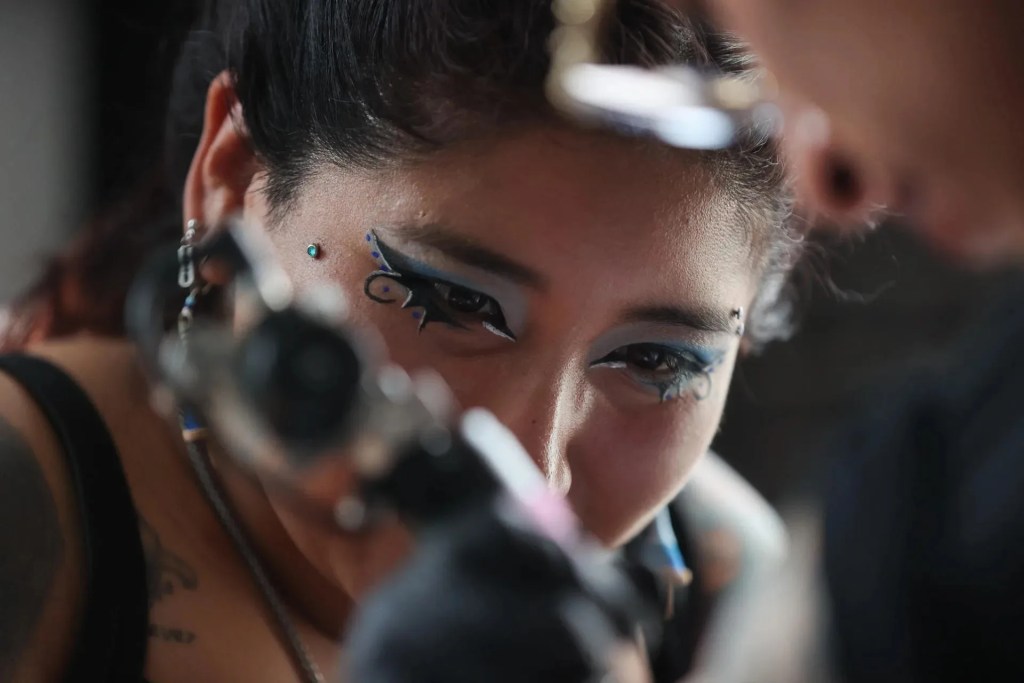
She has now been in the profession for four years, three under the guidance of mentors and one as an independent artist.
Her decision initially caused friction at home. “There was a little conflict with my family, but over the years they’ve seen me growing on my own, and now they support me more,” she said.
Working at “Hamuy” (meaning “come” in Quechua), a tattoo studio in La Paz’s San Pedro neighborhood, Artemisa fuses styles.
“My look is a mix of rock, goth, and the old cholita style, shorter skirts, corsets, boots, and a side shawl,” she explained.
She has chosen not to wear the traditional bowler hat yet, saying it remains a mark of honor in some provinces: “Once I win an award or work abroad, that’s when I’ll use it to complete my outfit.”
Inked homage to the Andes
Her body is a canvas of symbols.
On her left arm, she wears a smiling cholita framed by laurel leaves, a tattoo of Pachamama (Mother Earth), a llama, and an Andean cross, or “chakana.”
Her right arm is adorned with hyenas in black ink, while her leg features Asian motifs such as a crane.
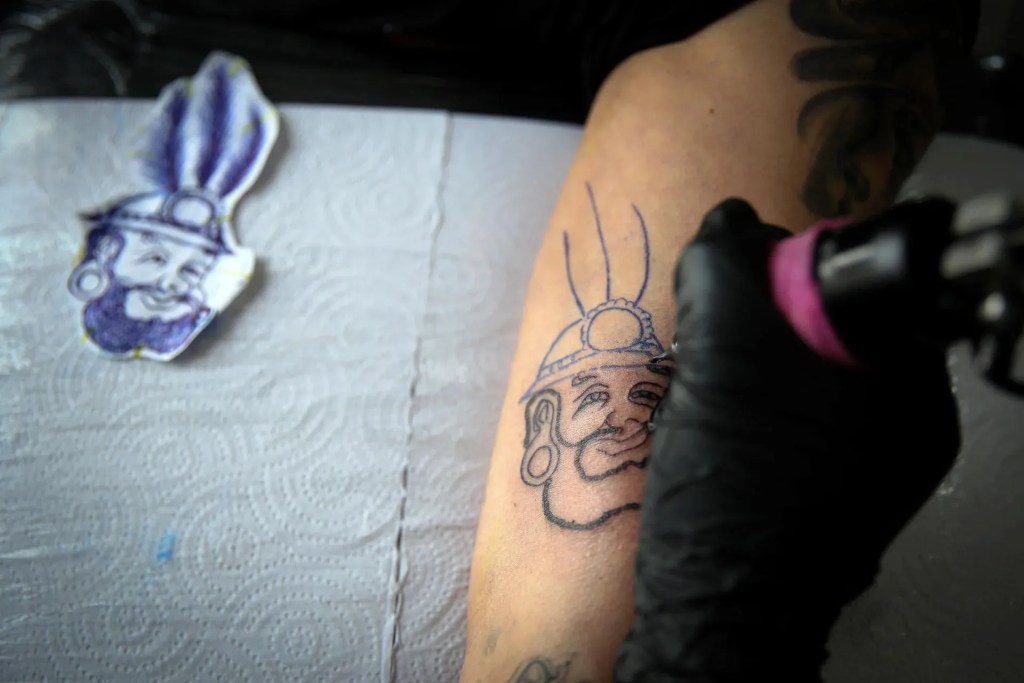
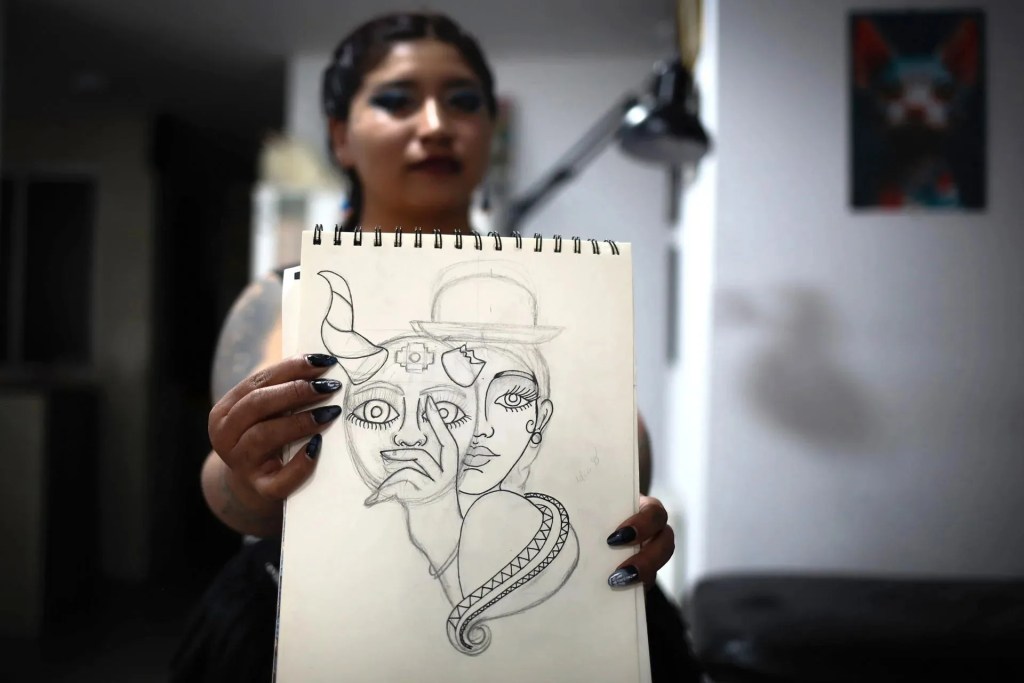
For her clients, she offers designs that honor Andean traditions: portraits of Aymara women (a member of an Indigenous people mainly inhabiting the high plateau region of Bolivia and Peru), cholitas drawn like rag dolls or Russian matryoshkas, and larger figures carrying La Paz landscapes in their shawls.
In 2023, her public debut as the “Cholita Tattoo Artist” drew both praise and backlash.
Some women identifying as peasant leaders accused her of disrespect and threatened legal action.
Artemisa kept working and, a year later, returned with renewed focus on pollera attire and tattoo styles, combining American traditional and Asian elements with Bolivian motifs.
She has also witnessed shifting attitudes toward tattoo culture. “Before it was taboo, but now even two women in polleras came to me for tattoos,” she said.
Despite criticism, Artemisa sees herself as part of a growing movement of cultural reinvention.
“The goal is to have my own studio and for my designs to be recognized inside and outside Bolivia,” she said. “It would be very beautiful to become an inspiration for other girls who wear the pollera.” EFE
gb/seo