
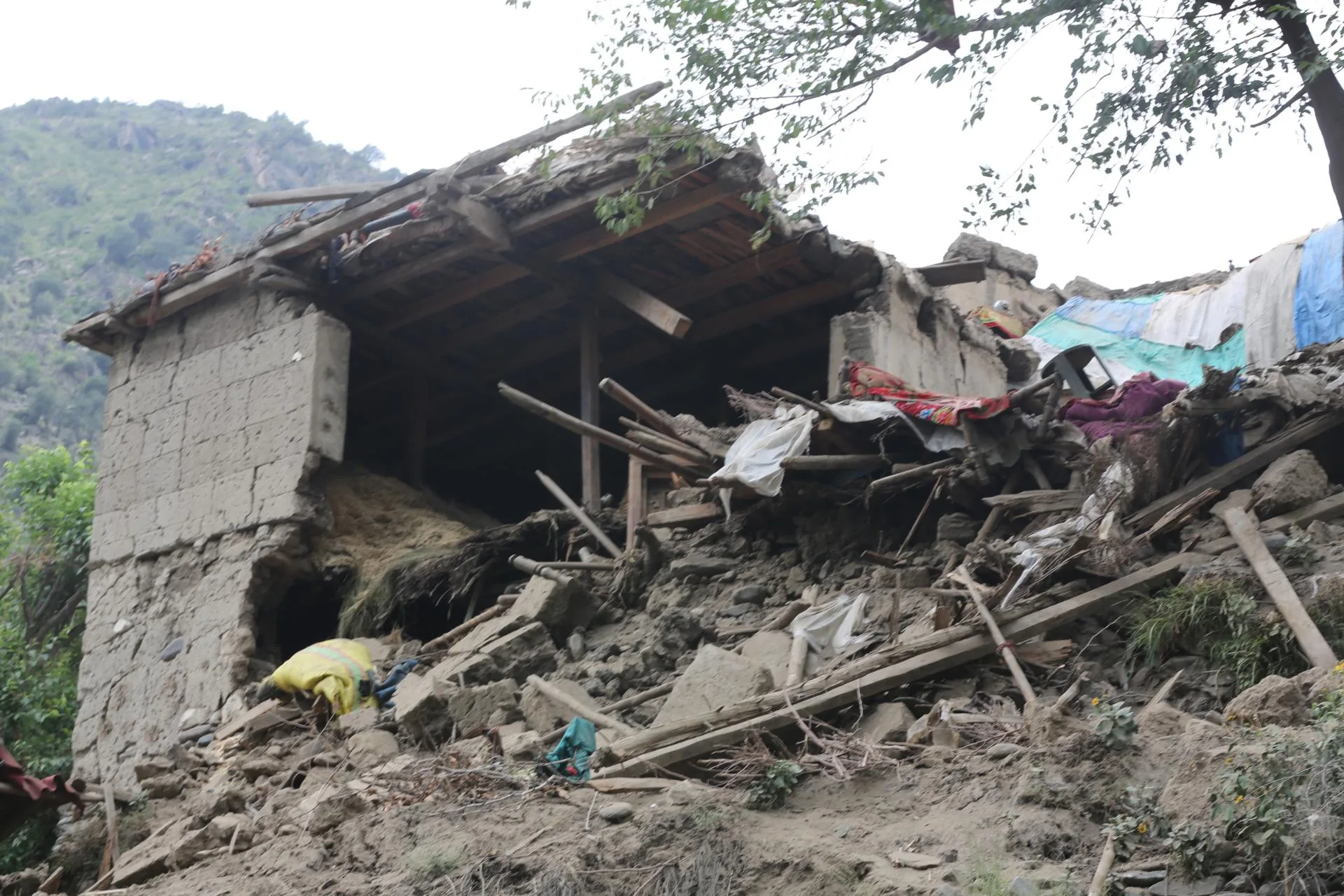
Kabul, Sep 1 (EFE).- At least 812 people have been killed and some 2,700 injured after a magnitude 6.0 earthquake struck eastern Afghanistan overnight, the Taliban-led government said Monday.
Government spokesperson Zabihullah Mujahid said that 800 of the fatalities and 2,500 of the injuries occurred in Kunar province, with 12 deaths and 255 injuries in neighboring Nangarhar. Casualties and damage were also reported in neighboring Laghman and Nuristan.
Officials warned that the toll is likely to rise as rescue efforts continue with emergency teams struggling to reach remote villages. Landslides have blocked narrow dirt roads in the mountainous region, delaying access to those in need.
The quake struck at 11:47 pm local time on Sunday and was followed by several aftershocks, at least two of them measuring 5.2. The US Geological Survey (USGS) located the epicenter 27 kilometers northeast of Nangarhar at a depth of eight kilometers, which typically increases a quake’s destructive impact.
The government has set up an emergency committee and allocated 1 billion Afghanis (about $14.4 million) for rescue and relief operations. The army has deployed helicopters to evacuate victims, while provincial hospitals in Jalalabad and Asadabad, nearest to the epicenter, are overwhelmed with the injured.
Thousands of families have been left homeless and urgently need food, water, and medical care. United Nations agencies and the Red Crescent have sent teams to coordinate aid delivery. The UN Office for the Coordination of Humanitarian Affairs (OCHA) estimated that at least 12,000 people across 17 districts in Kunar, Nangarhar, and Laghman have been affected.
China, Pakistan, Iran, Syria, and Egypt have expressed condolences, while India pledged humanitarian assistance and the European Union said it has a team on the ground ready to deliver aid.
Afghanistan, gripped by economic crisis since the Taliban takeover in 2021, remains highly vulnerable to natural disasters due to its weak health system, widespread poverty, and fragile infrastructure. The Hindu Kush region, one of the most seismically active areas in the world, frequently experiences shallow and destructive tremors, devastating communities where homes are often built of mud and stone.
The country has a history of deadly quakes, including two in February 1998 that killed around 4,000 people, followed by another in May of that year that left about 5,000 dead. EFE
lk-lgm-bks